


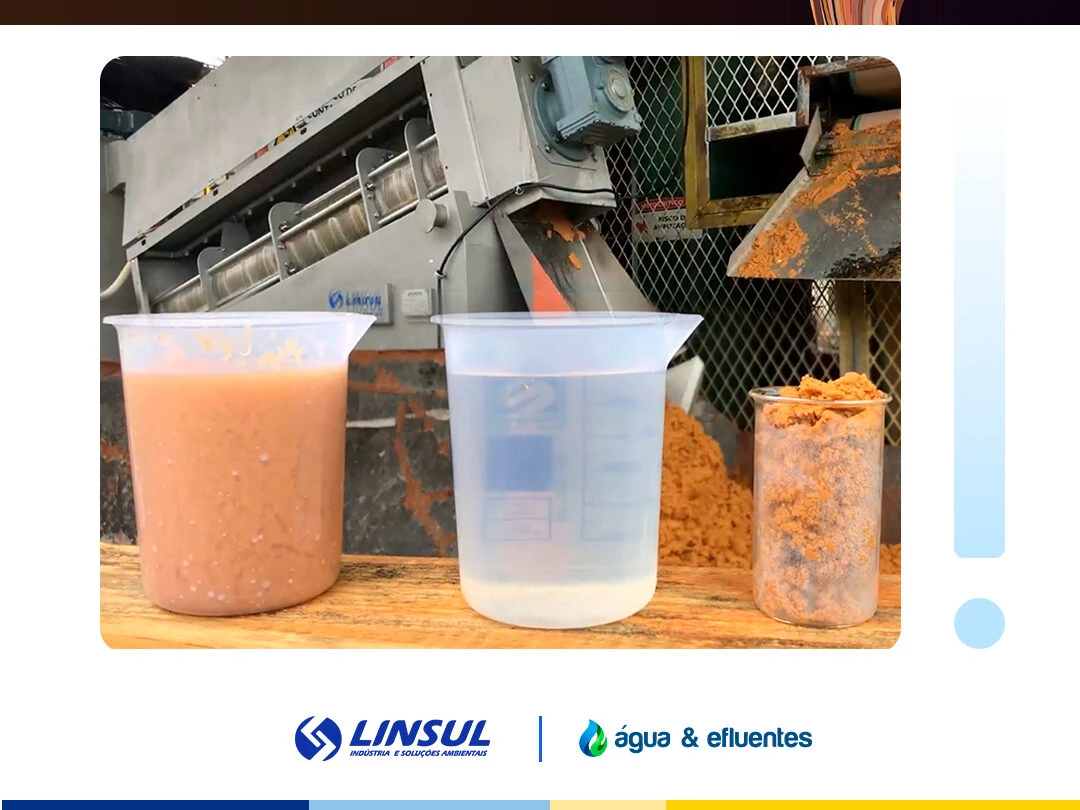
How to calculate how much sludge is left after dewatering?
Do you know how to calculate the reduction in sludge mass or volume after the dewatering process? In this post, we will show you how.
Do you know how to calculate the reduction in sludge mass or volume after the dewatering process? In this post, we will show you how.
The sludge dewatering stage is very important in a water or wastewater treatment plant, as it considerably reduces sludge moisture before final disposal and, consequently, reduces the plant's operating costs.
The calculation we are going to demonstrate is very interesting because, even though it is very simple to do, the reduction in sludge volume achieved with an "apparently" small reduction in moisture during dewatering is impressive and often does not seem logical.
To estimate the sludge volume reduction, we will use the formula widely used in dilution or concentration calculations:
C1 x V1 = C2 x V2
Where:
C1: Solids concentration in the sludge before dewatering
V1: Sludge volume before dewatering
C2: Solids concentration in the sludge after dewatering
V2: Sludge volume after dewatering
As an example, let's consider that the sludge from a WTP is sent to a thickener after being discharged from the clarifier. In this thickener, the sludge reaches a solids concentration of approximately 3% (w/w), that is, 97% water. From the thickener, the sludge is sent to a mechanical dewatering system, where the solids content after the process becomes 25% (w/w), or 75% water, already with a solid appearance, which makes it easier to manage.
Note that the solids concentrations above are expressed as mass of solids/mass of sludge (w/w). However, since we want to estimate the sludge volume, we can convert mass to volume or make some assumptions.
The density of WTP sludge with 3% solids content and of sludge with 25% solids content is, respectively, around 1,013 kg/m³ and 1,125 kg/m³ (these values vary for each type of sludge). However, we will assume a density of 1,000 kg/m³ for both sludges, since in this case there will be little difference in the final volume, and it will also simplify the calculation to better understand the example.
So, considering 1 m³ (or 1,000 kg) of thickened sludge being dewatered, and plugging the example values into the formula, the sludge volume after dewatering is:
C1 x V1 = C2 x V2
3% x 1 m³ = 25% x V2
V2 = 0.12 m³ or 120 kg (approximately)
In other words, the sludge volume went from 1 m³ to 0.12 m³ after dewatering.
The volume reduction can be calculated below:
% reduction = (V1 - V2)/V1 x 100
% reduction = (1 - 0.12)/1 x 100
% reduction = 88%
This means the sludge volume was reduced by 88% after dewatering, that is, around 0.88 m³ (or 880 kg) of water was removed from the sludge in the process.
A reduction in sludge moisture from 97% to 75% may not seem like much, but it represents an 88% reduction in sludge volume (or mass)!
Impressive, isn't it? Let us know what you think in the comments. And save this post for future reference.
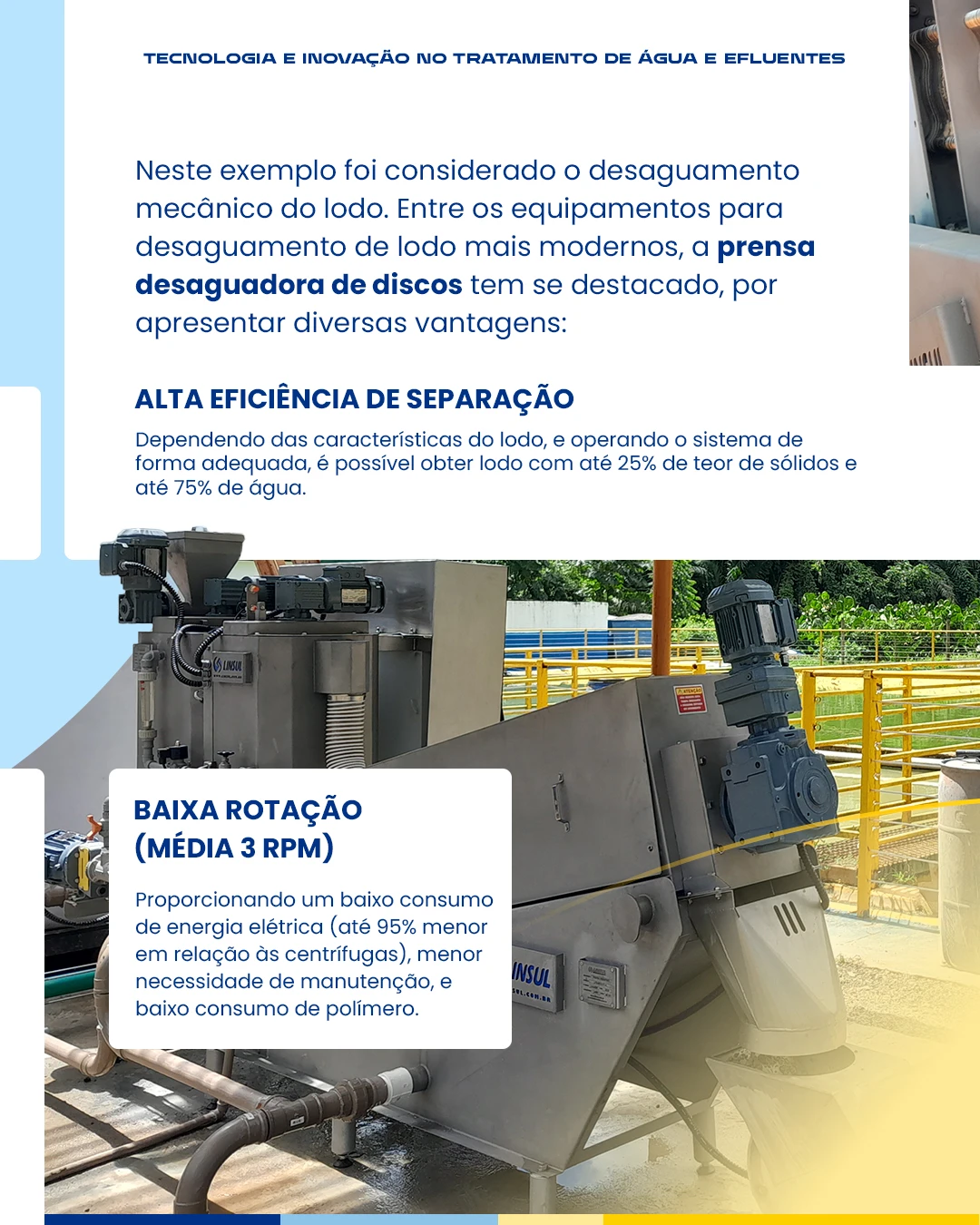
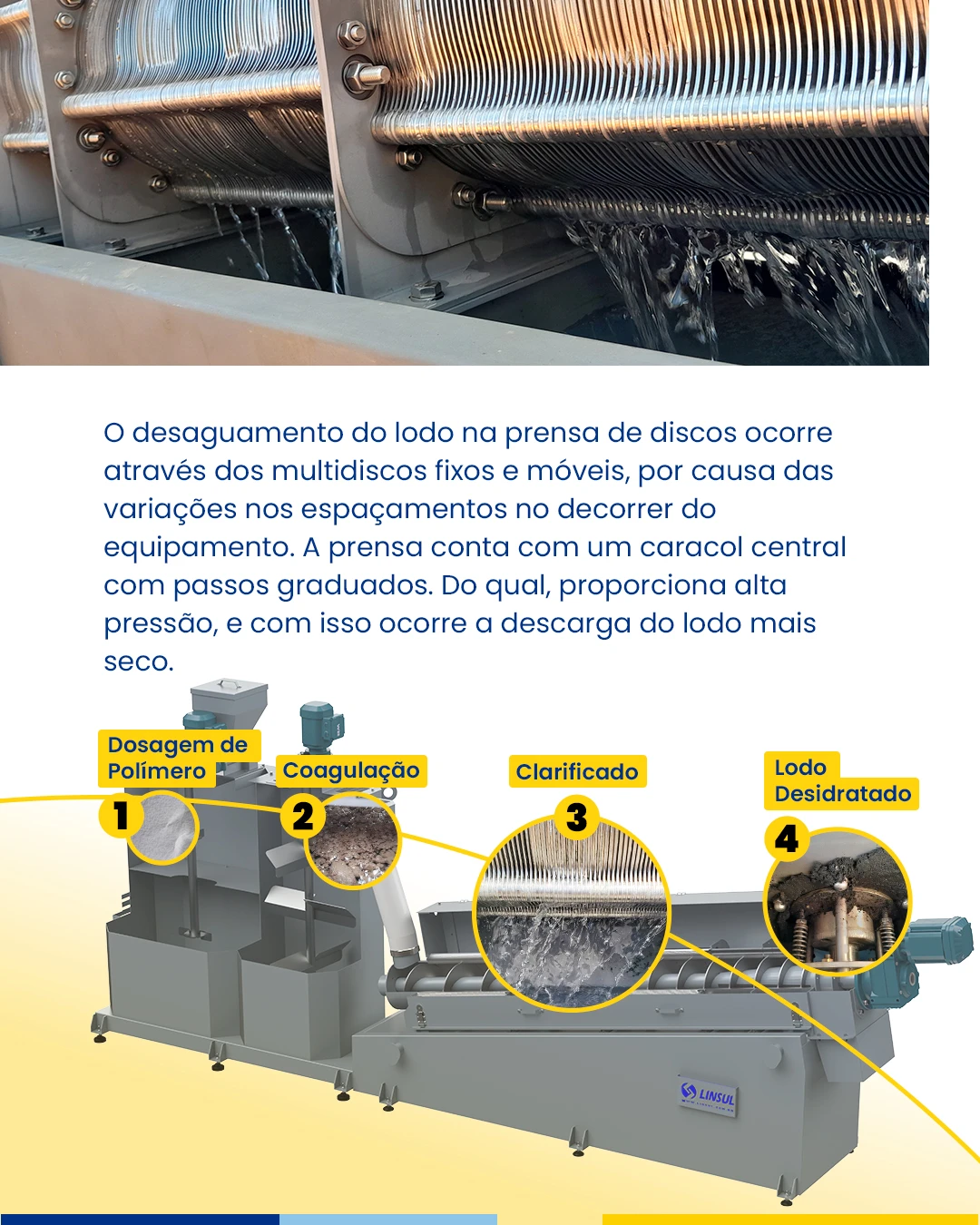
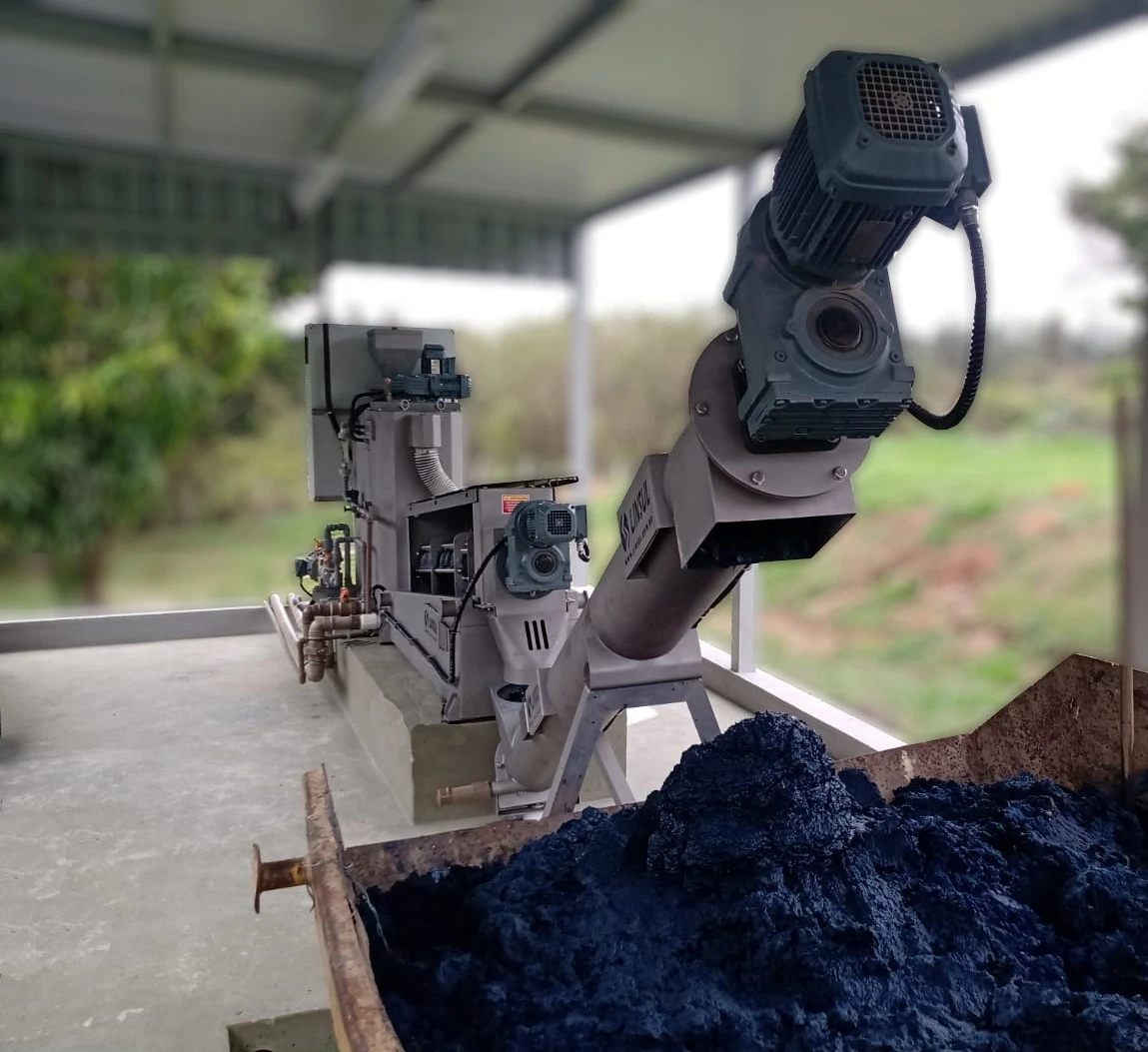
This example considered mechanical sludge dewatering. Among the most modern sludge dewatering equipment, the disc dewatering press has stood out for its many advantages. These include:
Low rotation speed (3 RPM on average), providing low electricity consumption (up to 95% lower than centrifuges), less need for maintenance and low polymer consumption.
High separation efficiency, producing low-moisture sludge and a more clarified effluent. Depending on the characteristics of the sludge, and with the system properly operated, it is possible to obtain sludge with up to 25% solids content and up to 75% water.
Sludge dewatering in the disc press occurs through fixed and moving multi-discs, due to the variations in spacing along the equipment. In addition, the press has a central screw with graduated pitches, which provides high pressure and results in the discharge of drier sludge.
Linsul Indústria e Soluções Ambientais manufactures and supplies the disc dewatering press, 100% stainless steel and compact, with a polymer preparation and dosing system and a mechanical flocculator. It also offers skid-mounted mobile units for rent or sale.

Trends, news and
knowledge
Trends, news and knowledge
 News
Linsul 10 Years | Evolution that Transforms
LINSUL celebrated a decade of history alongside those who helped make this journey a reality: employ...
 31 Aug 2026
 2 min read
 News
Renewal and Purpose: A Moment of Reflection on Our Journey
Easter is a time of renewal. At Linsul, we celebrated the date and the March birthdays with a specia...
07 Apr 2026
2 min read
 News
Become a wastewater treatment specialist
It's time to take the next step in your career!
26 Feb 2026
2 min read
 News
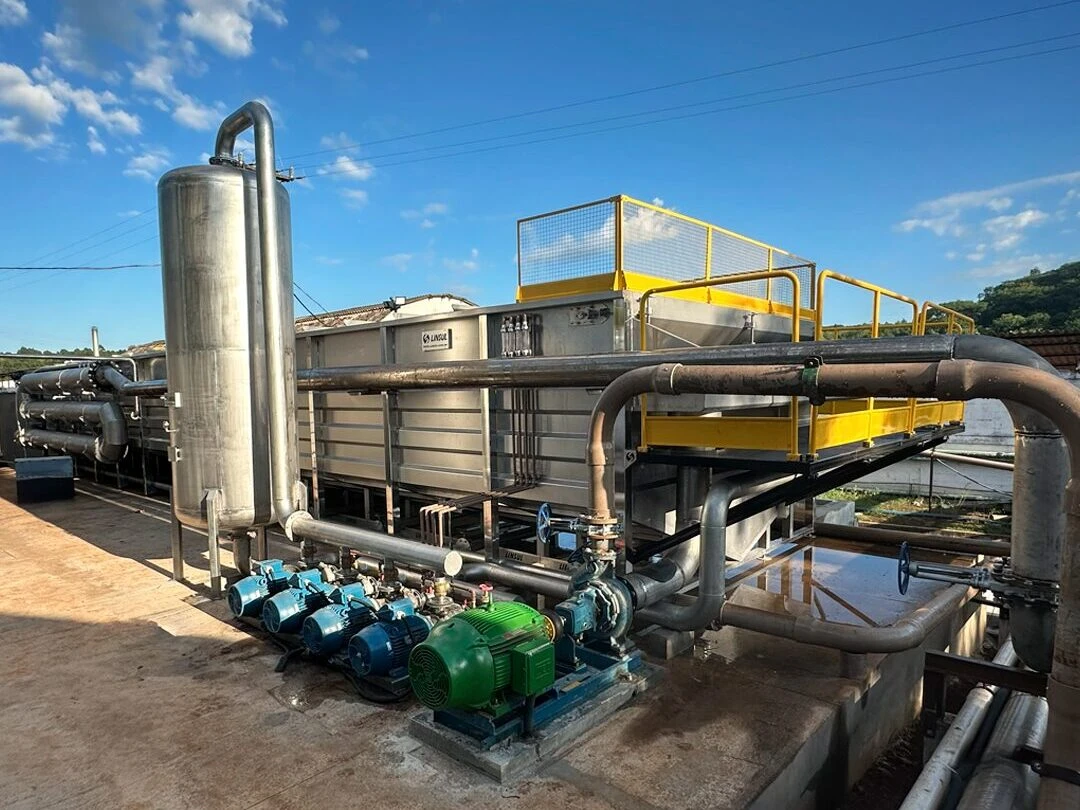
Success Story: Startup of a 600 m³/h Dissolved Air Flotator in the Pulp and Paper Industry
See the details of the startup of the 600 m³/h dissolved air flotator at a pulp and paper plant. Hig...
19 Feb 2026
2 min read
Commitment to Efficiency and Sustainability
We are committed to building solid, long-lasting partnerships with our clients, contributing to a more sustainable and efficient future.
Contact us