Water Treatment

Industrial Reverse Osmosis in Water Treatment.

Reverse osmosis is an advanced water treatment technology used to remove dissolved salts, minerals, organic matter, microorganisms and other contaminants from water. Using…

Home Applications Industrial Reverse Osmosis in Water Treatment
reverse osmosis

Reverse osmosis is an advanced water treatment technology used to remove dissolved salts, minerals, organic matter, microorganisms and other contaminants from water. Using semipermeable membranes and applied pressure, the system separates purified water from impurities, producing a stream of treated water of a high quality standard.

In practice, reverse osmosis is one of the most efficient solutions for industrial processes that require strict control of water quality, reduced conductivity, salt removal and the production of higher-purity water.

This technology is widely used in industries that depend on treated water for their production processes, steam generation systems, cooling towers, industrial reuse, demineralized water production and final polishing stages in water treatment plants.

1. How does reverse osmosis work?

Reverse osmosis works by pressurizing the feed water. This pressure forces the water through semipermeable membranes, which allow water molecules to pass but retain most of the dissolved salts, particles, minerals and contaminants.

During the process, two main streams are generated:

Permeate: the treated water that passes through the membranes and goes on to be used in the industrial process.

Concentrate or reject: the stream that carries the salts, impurities and contaminants retained by the membranes.

This process produces water of higher quality than conventional filtration methods, since reverse osmosis acts not only on the removal of suspended solids but also on the reduction of substances dissolved in the water.

That is why an industrial reverse osmosis system is recommended for operations that need stability, operational safety and tight control over parameters such as conductivity, total dissolved solids, hardness, chlorides, sulfates, silica and other compounds that can directly affect process efficiency.

2. Why is reverse osmosis important in industrial water treatment?

In many industries, water quality directly influences productivity, equipment service life and process stability. When water contains excess salts, minerals, organic matter or contaminants, scaling, corrosion, operational failures, increased chemical consumption and loss of efficiency can occur.

Reverse osmosis helps reduce these risks by delivering water that is better controlled and suited to sensitive industrial applications.

The main benefits include:

  • reduction of dissolved salts;

  • lower water conductivity;

  • control of process water quality;

  • protection of boilers, membranes, heat exchangers and industrial equipment;

  • reduction of scaling and mineral deposits;

  • possibility of water reuse;

  • greater operational stability;

  • production of demineralized or high-purity water;

  • improved efficiency of production processes.

In industrial operations that cannot stop, controlling water quality is no longer just a technical step and becomes a strategic decision.

3. Main applications of industrial reverse osmosis

Reverse osmosis can be applied in different industrial segments, especially where water with a low salt concentration, higher purity or specific control of physicochemical parameters is needed.

The main applications include:

4. Demineralized water production

Reverse osmosis is widely used to produce demineralized water, reducing the salts and minerals present in the feed water. This application is common in processes that require water with low conductivity and fewer dissolved contaminants.

5. Boiler feed water

The quality of the water used in boilers is essential to prevent scaling, corrosion and loss of thermal efficiency. Using reverse osmosis in boiler water pretreatment helps reduce salts, hardness and other compounds that can compromise operation.

6. Industrial water reuse

In reuse projects, reverse osmosis can act as a polishing stage, allowing treated water to be recovered for new industrial applications. This solution helps reduce drinking water consumption, optimize water resources and improve the sustainability of the operation.

7. Water treatment for production processes

Many industries need water of controlled quality for manufacturing, washing, preparing solutions, rinsing, formulations, cooling systems and other processes. Reverse osmosis makes it possible to adapt the water to the requirements of each operation.

8. Food and beverage industries

In the food and beverage industry, controlling water quality is essential to maintain production standards, safety and process stability. Reverse osmosis can be applied to treat water used in industrial processes, cleaning, formulations and utilities.

9. Chemical, pharmaceutical and cosmetics industries

Sectors that require greater control over the water used in their production stages can benefit from reverse osmosis as a solution to reduce dissolved contaminants and bring greater predictability to the process.

10. Pretreatment and post-treatment: important stages for reverse osmosis performance

For a reverse osmosis system to operate efficiently, it is essential to evaluate the quality of the feed water and correctly define the pretreatment stages.

Reverse osmosis membranes are sensitive components and can lose performance when exposed to suspended solids, chlorine, iron, manganese, organic matter, high hardness, silica or scaling.

For this reason, technologies such as the following can be applied upstream of reverse osmosis:

  • multimedia filtration;

  • activated carbon;

  • cartridge filter;

  • chemical dosing;

  • pH adjustment;

  • antiscalant dosing;

  • ultrafiltration;

  • free chlorine control;

  • chemical cleaning systems.

Correctly defining the pretreatment increases membrane life, reduces the risk of scaling and improves system stability.

In some projects, reverse osmosis can also be combined with downstream polishing stages, depending on the final quality desired for the treated water.

11. Components of a reverse osmosis system

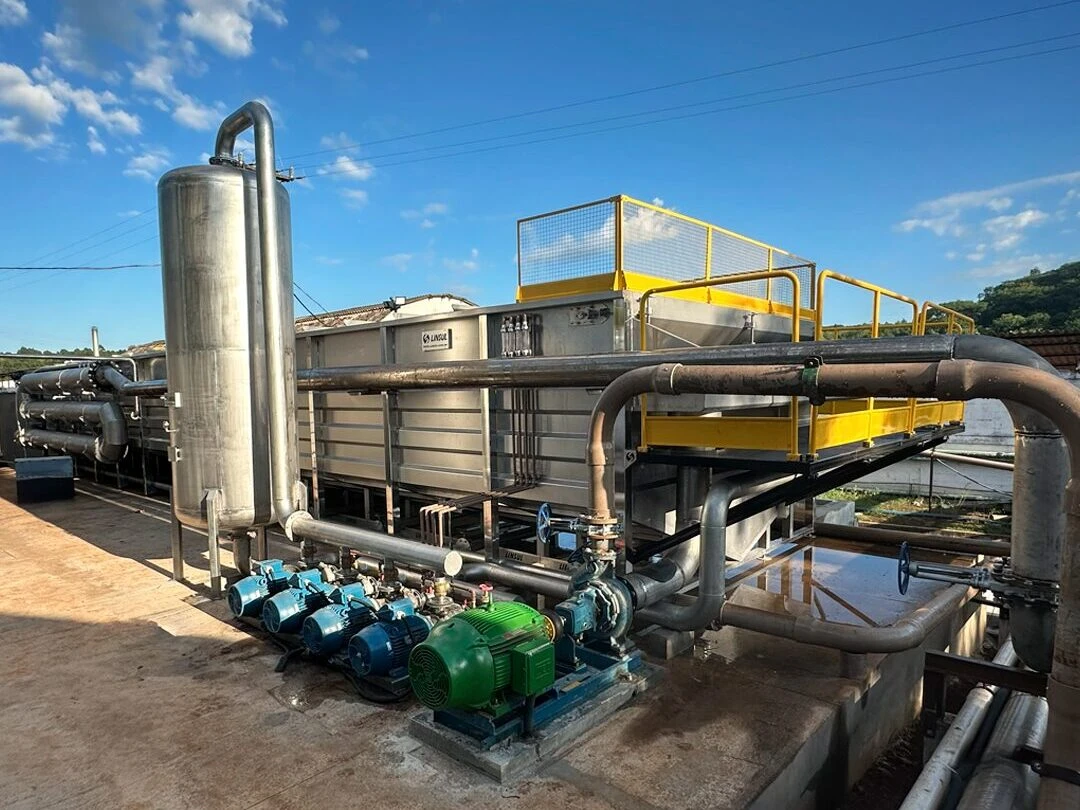
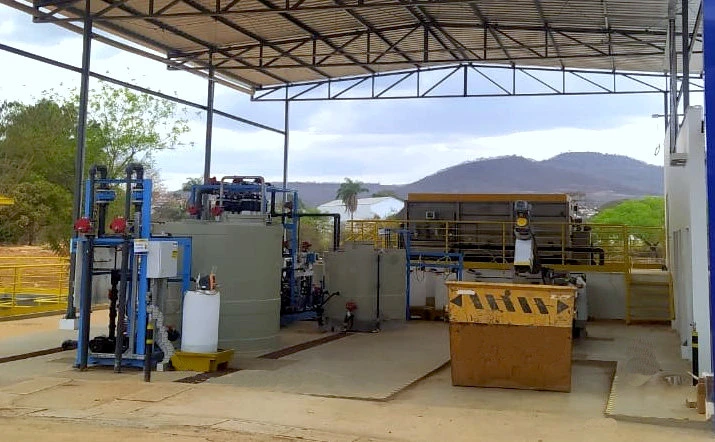
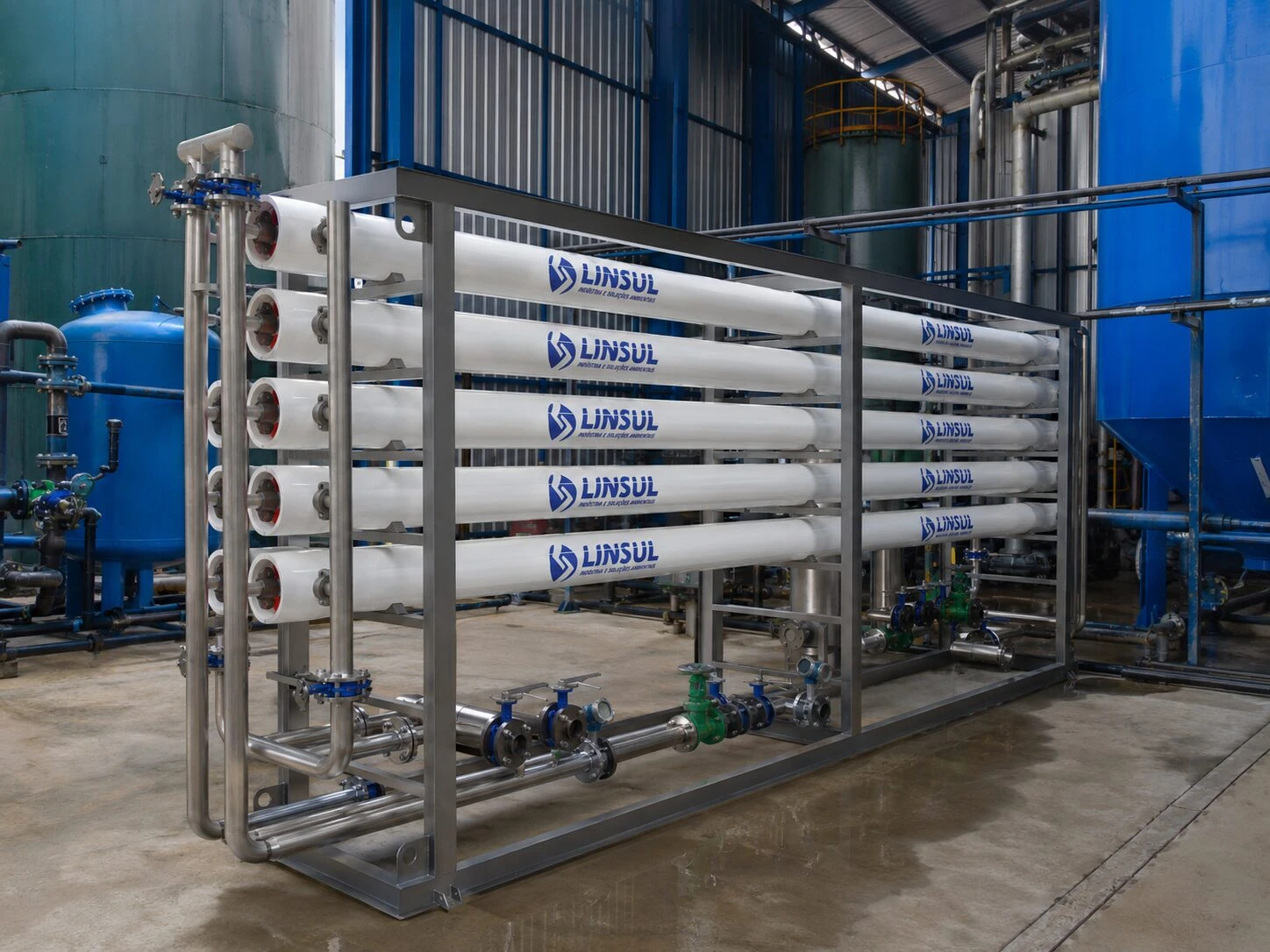
An industrial reverse osmosis system is made up of different integrated components, responsible for ensuring pressure, control, safety and efficiency in the membrane separation process.

12. Metal skid

The metal skid is the structure that supports and integrates the system components. It makes transport, installation, equipment alignment and operational maintenance easier.

At Linsul, systems are designed with structural robustness, organized components and easy access to operation and maintenance points in mind.

13. Cartridge filter

The cartridge filter acts as a protection stage for the membranes, retaining fine suspended particles such as sand, rust, sludge and other solids that could cause clogging or premature wear.

This stage is essential to protect the high-pressure pump and prevent damage to the membranes.

14. High-pressure pump

The high-pressure pump is responsible for raising the pressure of the feed water, allowing it to pass through the reverse osmosis membranes.

Correct pump sizing is decisive to ensure efficiency, adequate flow, recovery rate and operational stability.

15. Membrane vessels

The membrane vessels house the reverse osmosis elements and withstand the system's operating pressures. They direct the water flow between feed, permeate and concentrate, ensuring proper separation of the contaminants.

16. Reverse osmosis membranes

The membranes are the heart of the system. They separate the purified water from the dissolved contaminants. The choice of membranes must take into account flow rate, feed water quality, operating pressure, temperature, treatment goal and desired final quality.

17. Chemical dosing pumps

Dosing pumps allow the controlled application of chemicals such as antiscalants, pH adjusters, metabisulfite or other inputs defined according to the needs of the process.

Correct dosing helps protect the membranes and keep the operation stable.

18. Static mixer

The static mixer homogenizes the chemicals in the water, ensuring better contact between the applied inputs and the feed flow.

Since it has no moving parts, it is an efficient, low-maintenance solution for in-line mixing.

19. Control valves

The valves make it possible to adjust pressure, permeate flow, concentrate flow and recovery rate. These adjustments are essential to keep the system operating within the parameters defined in the design.

20. Sampling points

Sampling points make analyses and operational checks easier, allowing parameters such as conductivity, flow and water quality to be monitored at different points in the system.

This monitoring is important to identify loss of performance, the need for chemical cleaning or process adjustments.

21. Control and automation panel

The control panel centralizes electrical operation and can integrate sensors, instruments and automation systems. Depending on the application, the system can include monitoring of pressure, flow, conductivity and level, operational alarms and automated control.

Automation contributes to greater safety, predictability and ease of operation.

22. What should you evaluate before investing in a reverse osmosis system?

Before installing a reverse osmosis system, a technical analysis of the application is required. Each project must consider the characteristics of the feed water and the final goal of the treatment.

The main factors to be evaluated include:

  • required flow rate;

  • raw water quality;

  • conductivity;

  • hardness;

  • presence of iron and manganese;

  • total dissolved solids;

  • turbidity;

  • free chlorine;

  • organic matter;

  • temperature;

  • available pressure;

  • desired final quality;

  • recovery rate;

  • need for automation;

  • operating regime;

  • destination of the concentrate;

  • integration with other treatment stages.

A poorly sized project can lead to loss of efficiency, excessive energy consumption, shorter membrane life, more maintenance shutdowns and higher operating costs.

For this reason, reverse osmosis should be treated as part of a complete engineering solution, not just as a standalone piece of equipment.

23. Reverse osmosis and water reuse: a strategic solution for industry

Water reuse is becoming increasingly important in industrial operations seeking to reduce water consumption, improve environmental management and increase operational efficiency.

In this context, reverse osmosis can act as an essential stage for water polishing, removing dissolved salts and contaminants that remain after conventional treatments.

When properly applied, this technology allows the industry to reuse part of the treated water in production processes, utilities, cooling towers, washing or other applications compatible with the quality obtained.

In addition to the environmental benefit, reuse can contribute to greater water security, less dependence on external sources and better predictability in operation.

24. Custom reverse osmosis for each application

Linsul develops custom reverse osmosis systems, taking into account the needs of each industrial process.

Each unit is designed based on technical criteria such as flow rate, feed water quality, recovery rate, level of automation, process characteristics and desired final quality.

This approach makes it possible to deliver systems better suited to the reality of each operation, avoiding generic solutions and increasing the reliability of the treatment.

Linsul reverse osmosis units can integrate different components, such as a cartridge filter, high-pressure pump, membrane vessels, dosing pumps, static mixer, control valves, sampling points, instrumentation, control panel and metal skid.

The goal is to offer a robust, efficient solution ready for industrial operation.

25. Advantages of industrial reverse osmosis

Reverse osmosis offers a number of advantages for industries that need treated water with strict quality control.

The main benefits include:

  • high efficiency in removing dissolved salts;

  • production of high-purity water;

  • reduced conductivity;

  • possibility of water reuse;

  • greater protection for equipment and processes;

  • continuous, automatable operation;

  • integration with existing treatment systems;

  • lower risk of scaling in sensitive processes;

  • improved operational stability;

  • a solution adaptable to different flow rates and applications.

When correctly applied, reverse osmosis helps raise the performance of water treatment and make industrial operations more efficient, safe and sustainable.

26. Conclusion

Reverse osmosis is one of the most efficient technologies for industrial water treatment, especially in applications that require the removal of dissolved salts, conductivity control, demineralized water production or water reuse.

Its operation with semipermeable membranes makes it possible to separate dissolved contaminants and deliver higher-quality water for different industrial processes.

However, to achieve high performance, the system must be correctly sized, integrated with adequate pretreatment and designed according to the characteristics of the operation.

Linsul develops custom industrial reverse osmosis systems, with applied engineering, robust construction and a focus on operational performance.

If your industry needs to improve water quality, reduce dissolved salts, produce demineralized water or evaluate a reuse solution, talk to a Linsul specialist.

Blog & News

Trends, news and
knowledge

Trends, news and knowledge

Our partnerships

Commitment to Efficiency and Sustainability

We are committed to building solid, long-lasting partnerships with our clients, contributing to a more sustainable and efficient future.

Contact us