Sludge

Accumulated sludge is accumulated cost.

Sludge generation is a natural consequence of different water and wastewater treatment processes. However, when this material remains highly concentrated in water or builds up at the pl…

Home Applications Accumulated sludge is accumulated cost
Sludge generation is a natural consequence of different water and wastewater treatment processes. However, when this material remains highly concentrated in water or builds up at the treatment plant, it is no longer just an operational residue and becomes a recurring cost for the industry.

1. Understand how dewatering can reduce volume, moisture and transport and disposal costs

Sludge generation is a natural consequence of different water and wastewater treatment processes. However, when this material remains highly concentrated in water or builds up at the treatment plant, it is no longer just an operational residue and becomes a recurring cost for the industry.

Storage, pumping, cleaning, transport, labor and final disposal are some of the expenses directly influenced by the amount and characteristics of the sludge generated.

In many cases, the company is not transporting only solids. It is paying to store, move and dispose of a large amount of water contained in the sludge.

This is where sludge dewatering takes on a strategic role. With a sludge dewatering press, it is possible to separate part of the liquid phase from the solids, reduce the volume of the material and improve handling conditions within the wastewater treatment plant.

More than a complementary step, dewatering can be decisive for the efficiency, continuity and operating cost of an industrial WWTP.

2. Why does accumulated sludge increase WWTP costs?

The cost associated with sludge is not only in its generation. It extends throughout the entire management process of the material.

The greater the volume and moisture of the sludge, the greater the demands can be regarding:

  • storage tanks and areas;

  • pumping and transfer;

  • operating labor;

  • removal frequency;

  • hiring of transport;

  • cleaning of structures and equipment;

  • odor control;

  • disposal at authorized sites;

  • shutdowns for maintenance or unclogging.

A system that does not remove sludge at the right frequency can also compromise earlier treatment stages.

Excessive accumulation can reduce the useful volume of tanks, impair settling, overload equipment, increase the presence of solids in the treated effluent and cause process instability.

For this reason, sludge management must be considered an integrated part of treatment, not just an activity after the WWTP operation.

3. Excess moisture is one of the main challenges

Sludge removed from clarifiers, flotators, biological systems and physicochemical processes usually contains a significant amount of water.

This characteristic gives the material a large volume, even when the actual amount of solids is relatively small.

In practice, this means a company may be:

  • using more storage space;

  • making more trips for removal;

  • moving a heavier material;

  • increasing transport costs;

  • disposing of water together with the solids.

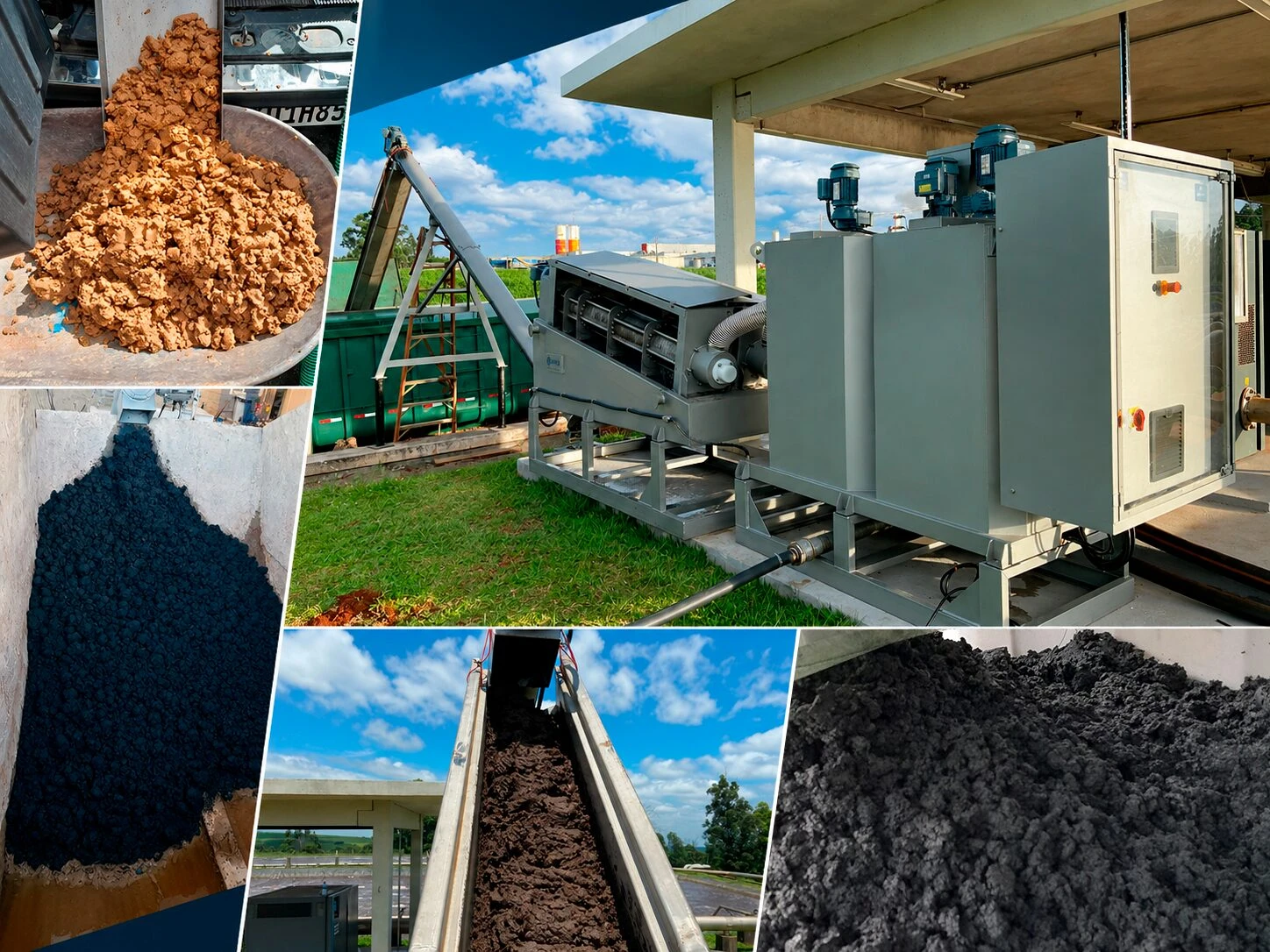
Mechanical sludge dewatering seeks to reduce this water content, producing a material with a higher solids concentration, usually called sludge cake.

The liquid separated during the process can be returned to a suitable stage of the plant, depending on the system configuration and the characteristics of the operation.

4. What is sludge dewatering?

Sludge dewatering is the process used to reduce the amount of water in the material generated by wastewater treatment.

The goal is not to eliminate moisture completely, but to increase the solids concentration and reduce the volume that needs to be stored, transported and disposed of.

The process may involve the following steps:

  1. sludge reception or feeding;

  2. chemical conditioning, when necessary;

  3. mechanical separation of solids and liquids;

  4. formation of the sludge cake;

  5. transport or discharge of the dewatered material;

  6. return of the separated liquid to treatment.

Dewatering efficiency depends on factors such as the origin of the sludge, solids concentration, composition, viscosity, presence of oils, chemical conditioning and regularity of feeding.

That is why sizing an industrial sludge press must start from a technical analysis of the operation.

5. How does a sludge dewatering press work?

The sludge dewatering press receives the material coming from the treatment plant and promotes the mechanical separation between the liquid phase and the solids.

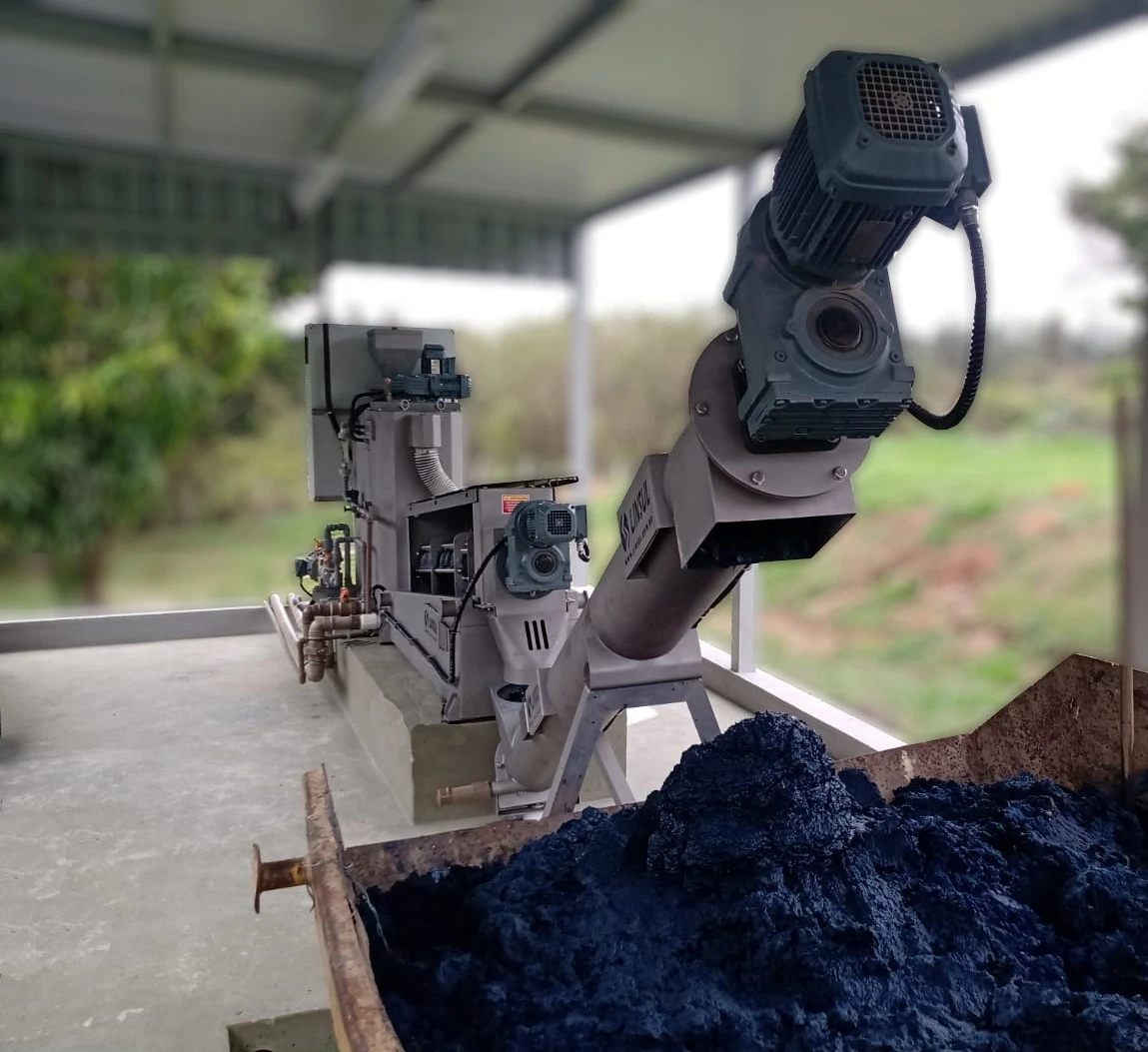
During operation, the sludge is conveyed through the equipment and subjected to conditions that favor the release of water. The solids are retained and progressively concentrated until they form the dewatered cake.

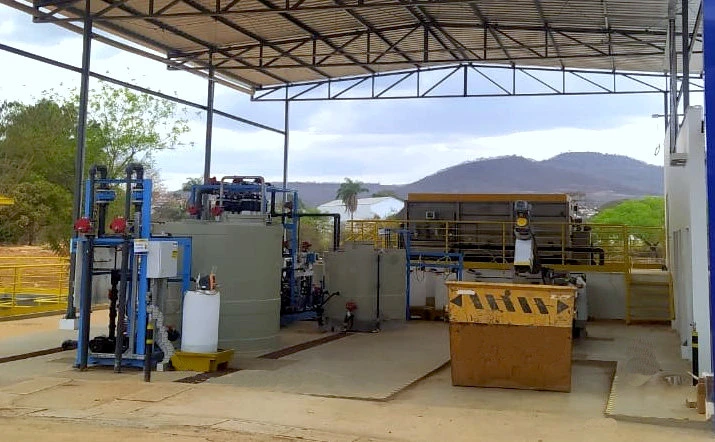
The process can be integrated with polymer preparation and dosing systems, feed pumps, electrical panels, sensors, automation and cake conveying equipment.

When correctly sized, the press enables a more organized, continuous and predictable operation, reducing dependence on manual processes or on structures with low dewatering efficiency.

6. Main benefits of the sludge dewatering press

Reduced sludge volume

By removing part of the water in the material, the press reduces the volume that needs to be stored and disposed of.

This reduction can improve the use of the available area at the WWTP and lower the removal frequency.

Lower transport costs

Sludge transport is usually charged according to factors such as weight, volume, distance and frequency.

A more concentrated material can mean fewer trips and a smaller amount transported over time.

Better operational control

Regular sludge removal reduces the risk of accumulation in the plant's tanks and structures.

This contributes to a more stable, organized operation consistent with the WWTP design capacity.

Easier storage

The sludge cake has characteristics better suited to temporary storage in dumpsters, containers or areas prepared for this purpose.

Fewer manual activities

Process automation reduces the need for direct handling of the material and improves working conditions for the operating team.

Greater predictability in waste management

With a defined dewatering routine, the company can better plan the removal, transport and disposal of the sludge.

7. The role of the screw conveyor in sludge handling

After leaving the press, the sludge cake must be conveyed to the storage or collection point.

The sludge screw conveyor can be integrated into the system to automate this movement.

It receives the dewatered material and conveys it to:

  • dumpsters;

  • big bags;

  • containers;

  • silos;

  • complementary equipment;

  • specific storage points.

This integration reduces manual intervention, improves the organization of the area and allows the system to operate more continuously.

Using a sludge dewatering press with a screw conveyor together offers a more complete solution for handling the solids generated by the plant.

8. Where does the sludge treated by the press come from?

The dewatering press can be applied to sludge from different treatment stages and technologies.

The main sources include:

  • clarifiers;

  • dissolved air flotators;

  • physicochemical treatments;

  • activated sludge systems;

  • biological processes;

  • water treatment plants;

  • industrial wastewater treatment plants;

  • sanitary treatment systems.

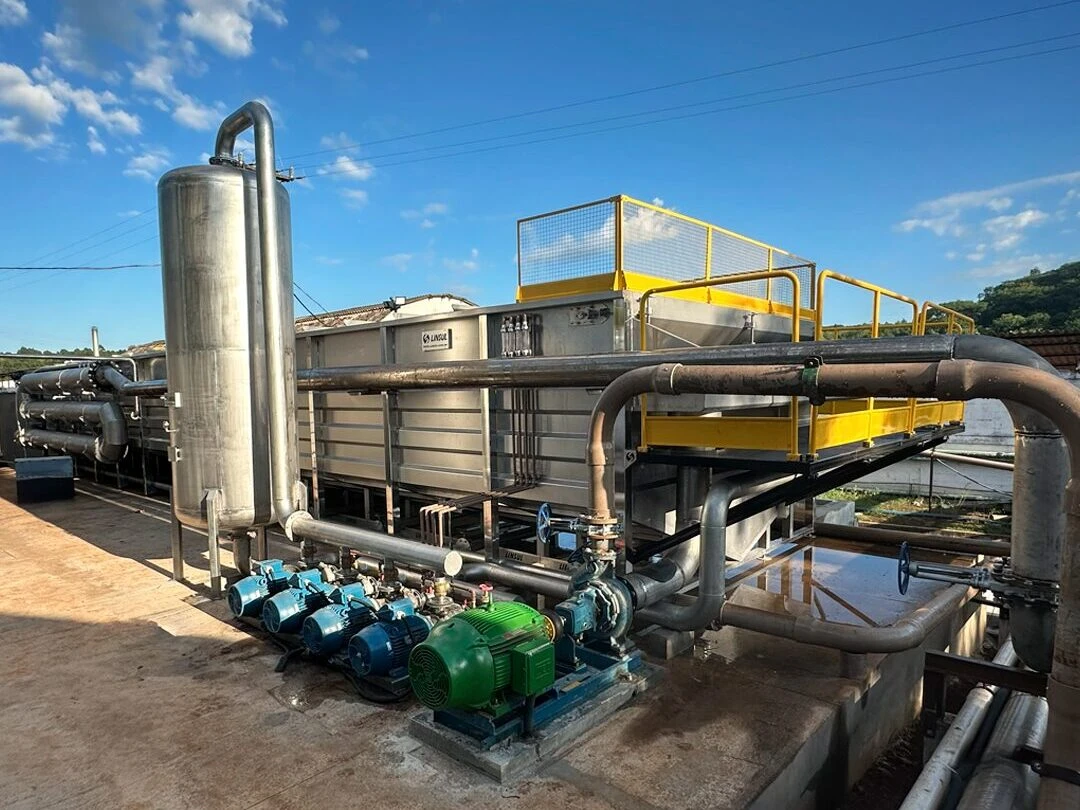
In a DAF Flotator, for example, fats, oils and solids are separated from the wastewater and concentrated on the surface of the equipment. This material must be removed and then managed.

The press can act in the next step, reducing the moisture and volume of the sludge generated by the flotation process.

This integration makes it possible to structure a complete line:

solids separation → sludge storage or equalization → dewatering → cake transport → final disposal.

9. Which industries can use a sludge press?

The solution can be applied in different segments that generate sludge while treating their wastewater, such as:

  • meatpacking plants;

  • dairies;

  • food and beverage industries;

  • textile industries;

  • chemical industries;

  • pulp and paper;

  • metallurgy;

  • meat processing;

  • tanneries;

  • sanitation;

  • industries with physicochemical treatment;

  • operations with biological systems.

Each segment has different sludge characteristics. Therefore, there is no single configuration that serves all applications equally.

The equipment must take into account the composition of the material and the specific conditions of each plant.

10. When should you consider installing a dewatering press?

Some signs may indicate that sludge management needs to be reviewed:

  • very frequent removal of liquid sludge;

  • high transport and disposal costs;

  • lack of storage space;

  • sludge buildup in clarifiers or tanks;

  • manual and unsafe operation;

  • difficulty keeping the WWTP stable;

  • excess moisture in the material disposed of;

  • need to expand treatment capacity;

  • increased industrial production;

  • overload of existing systems.

The presence of one or more of these factors does not, on its own, mean that the press is the only solution. However, it indicates the need for a technical assessment of the process.

11. What should be analyzed when sizing?

To select and size a sludge press, engineering needs to know the real characteristics of the operation.

The main data include:

Sludge flow rate

It is necessary to identify how much sludge will be fed into the equipment per hour or per day.

Solids concentration

The amount of solids present directly influences the capacity and performance of the system.

Sludge origin

Biological, physicochemical and mineral sludges, or sludges containing fats, can behave differently.

Available operating time

The press can operate continuously or during scheduled periods, according to the WWTP routine.

Chemical conditioning

Some sludges need polymers or other products to improve the separation between solids and liquids.

Cake destination

The design must consider where the material will be stored and how it will be removed from the area.

Installation characteristics

Available space, maintenance access, power, drainage points, piping and automation also influence the solution.

A proper assessment avoids both undersizing and the installation of equipment that is larger and more complex than the process requires.

12. Integrated engineering for greater efficiency

The efficiency of a press does not depend on the equipment alone.

Operation is also influenced by:

  • regularity of feeding;

  • polymer preparation;

  • sludge concentration;

  • operating adjustments;

  • automation;

  • cleaning;

  • maintenance;

  • integration with the upstream and downstream stages.

For this reason, the solution must be developed considering the entire treatment flow.

At Linsul, the project can integrate the sludge dewatering press, chemical preparation, pumping, automation and cake conveying, forming a system that matches the needs of the operation.

This approach reduces improvised interfaces and contributes to greater reliability, robustness and performance of the whole system.

13. Linsul sludge dewatering press

Linsul develops solutions for industrial water and wastewater treatment, taking into account the flow rate, process characteristics, available space and operational goals of each customer.

The Linsul Sludge Dewatering Press is designed to promote efficient separation between solids and liquids, helping to reduce the volume and moisture of the sludge.

The system can be supplied with complementary equipment and components, such as:

  • feed pump;

  • polymer preparation and dosing;

  • electrical panel;

  • instrumentation;

  • automation system;

  • platforms and access structures;

  • screw conveyor;

  • discharge and storage devices.

Each solution is sized according to the technical information of the application.

The goal is to provide a safe, continuous operation that meets the requirements of industrial treatment.

14. Accumulated sludge should not be treated as just waste

Sludge concentrates part of the contaminants removed during treatment. For this reason, its management directly influences the efficiency and total cost of the plant.

Postponing removal, operating with a high moisture content or depending on manual processes can increase expenses and compromise the stability of the WWTP.

Dewatering turns a bulky, hard-to-handle material into a more concentrated, organized cake that is suitable for transport and disposal.

In other words:

the more water remains in the sludge, the higher the cost accumulated throughout the process can be.

15. Is your operation still transporting water along with the sludge?

Linsul develops Sludge Dewatering Presses with Screw Conveyors, designed according to the characteristics and capacity of each treatment plant.

With integrated engineering, robust construction and process control, the solution helps reduce volume, improve handling and increase the operational efficiency of the WWTP.

Talk to the Linsul team and assess the right solution for sludge management in your operation.

16. Frequently asked questions about sludge dewatering presses

What is a sludge dewatering press used for?

The press is used to separate part of the water in the sludge, increasing the solids concentration and reducing the volume of material that needs to be stored, transported and disposed of.

Does the press remove all the water from the sludge?

No. The process reduces moisture and produces a more concentrated cake, but the material still retains some water. The result depends on the characteristics of the sludge and the operating conditions.

Can dewatering reduce costs?

It can help reduce storage, transport and disposal expenses, especially when the operation handles large volumes of sludge with high moisture.

Can every type of sludge be dewatered in the same way?

No. The origin, composition, solids concentration and behavior of the material influence the process. For this reason, each application must be technically evaluated.

What is the role of the screw conveyor?

The screw conveyor receives the cake produced by the press and conveys the material to a dumpster, big bag, silo or other storage point.

What data is needed to request an assessment?

The main data are the origin of the sludge, the flow generated, the solids concentration, the hours available for operation and the characteristics of the current disposal. Samples or analyses can also help with the assessment.

Can the press be integrated into an existing WWTP?

Yes. Feasibility depends on the available space, connections, flow rate and current configuration of the plant. The integration must be analyzed by engineering.

Blog & News

Trends, news and
knowledge

Trends, news and knowledge

Our partnerships

Commitment to Efficiency and Sustainability

We are committed to building solid, long-lasting partnerships with our clients, contributing to a more sustainable and efficient future.

Contact us