


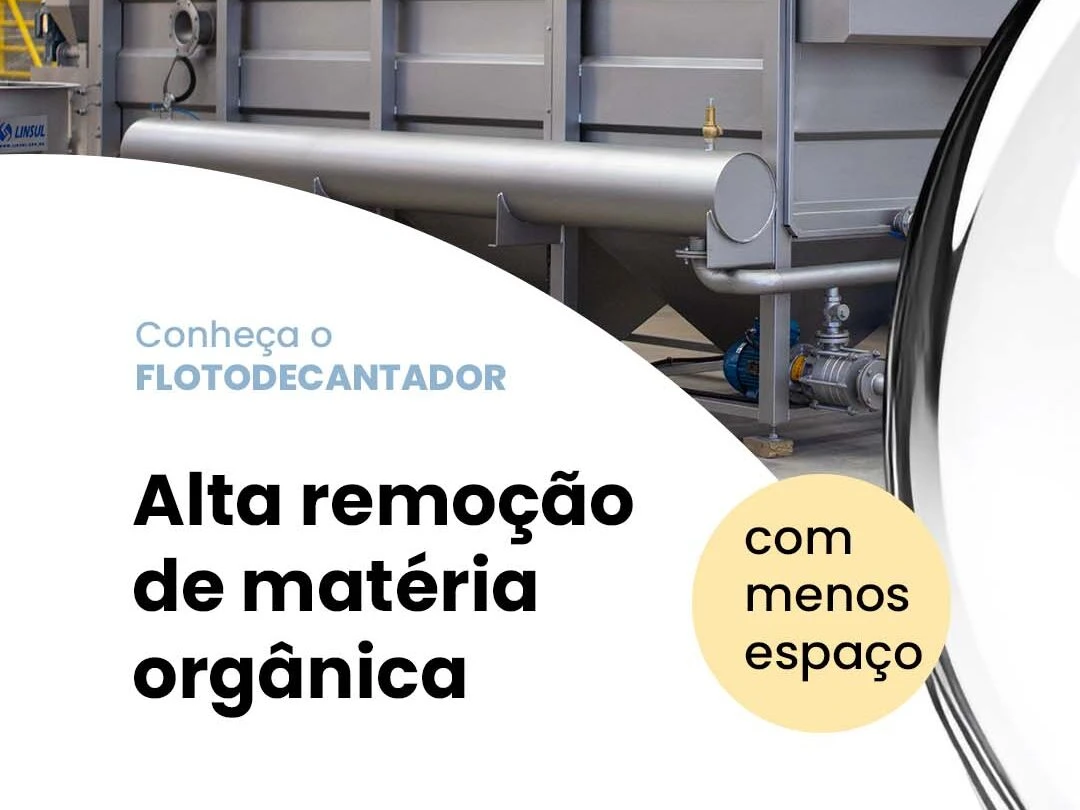
Flotodecantador: High removal of organic matter in less space.
The flotodecantador is innovative equipment that combines the dissolved air flotation (DAF) and settling processes in a single compact system. This technology stands out in the treatment sector…
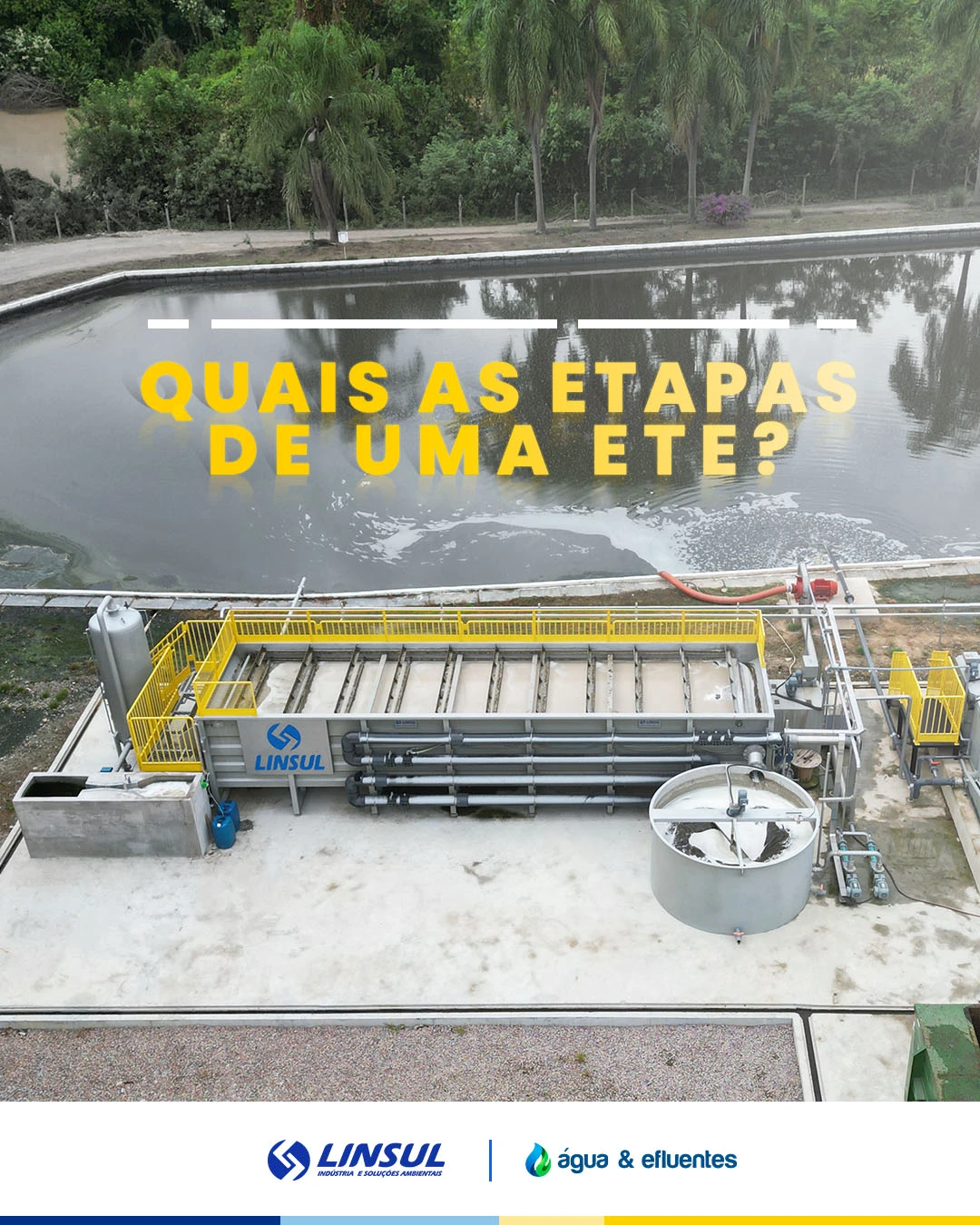
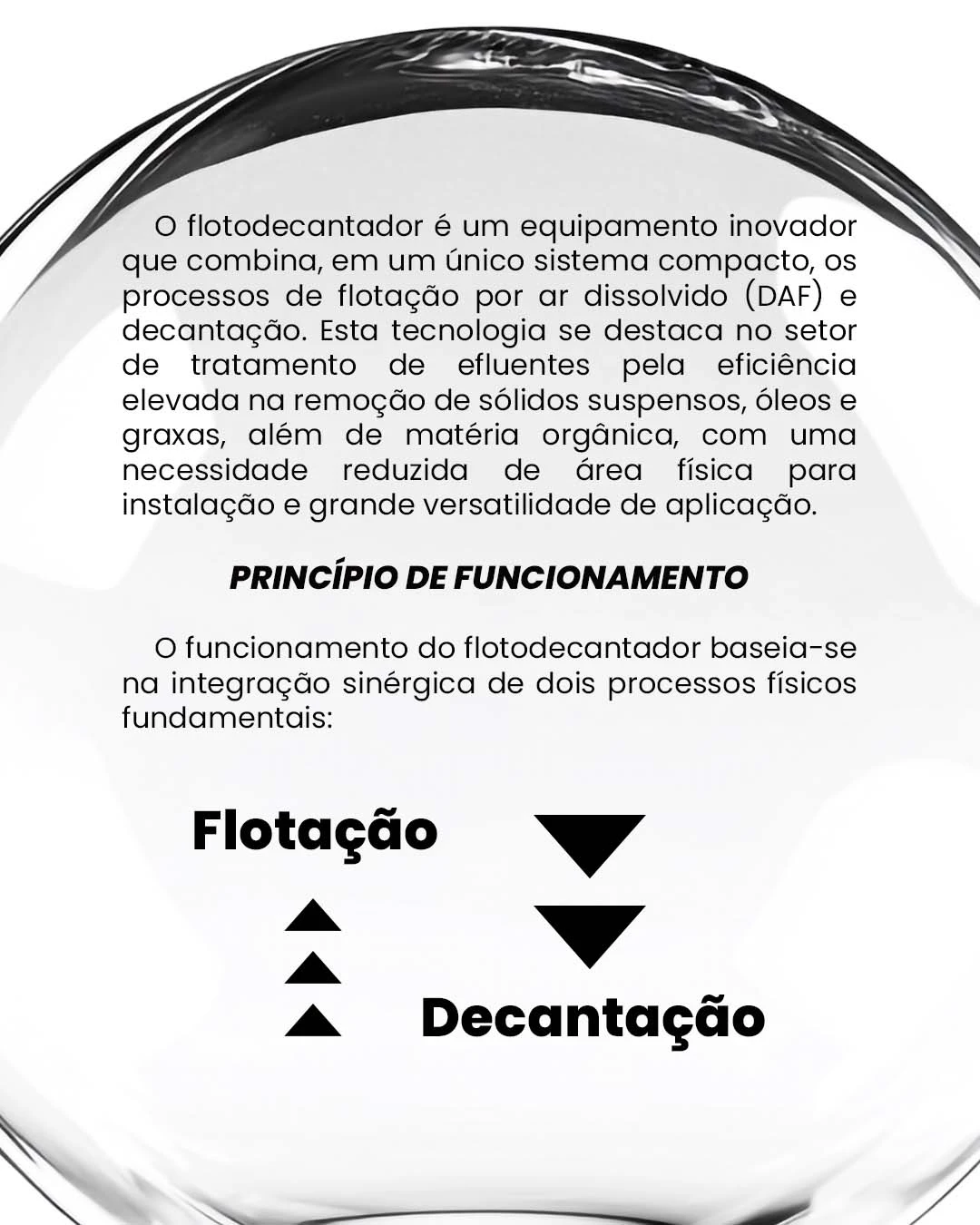
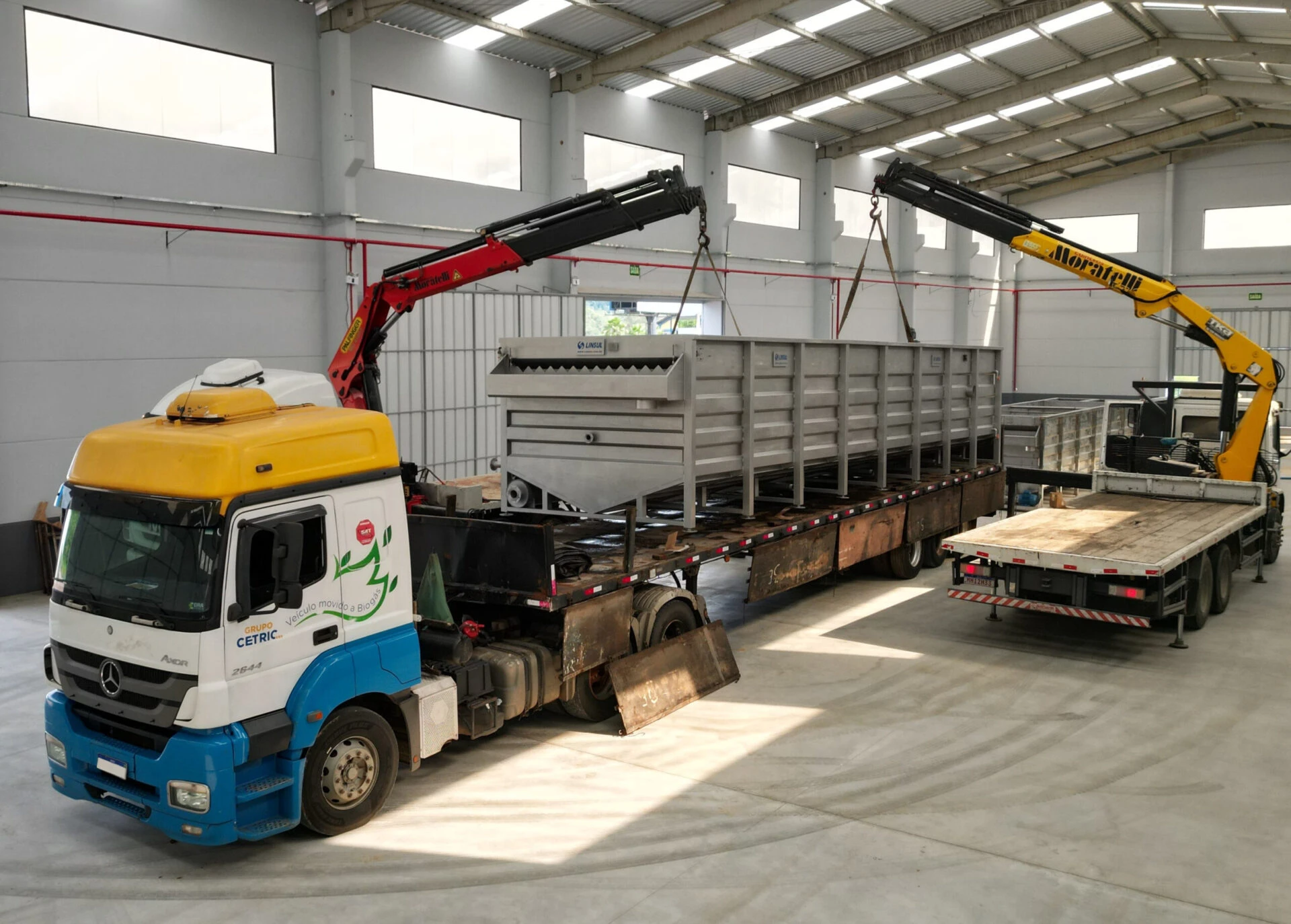
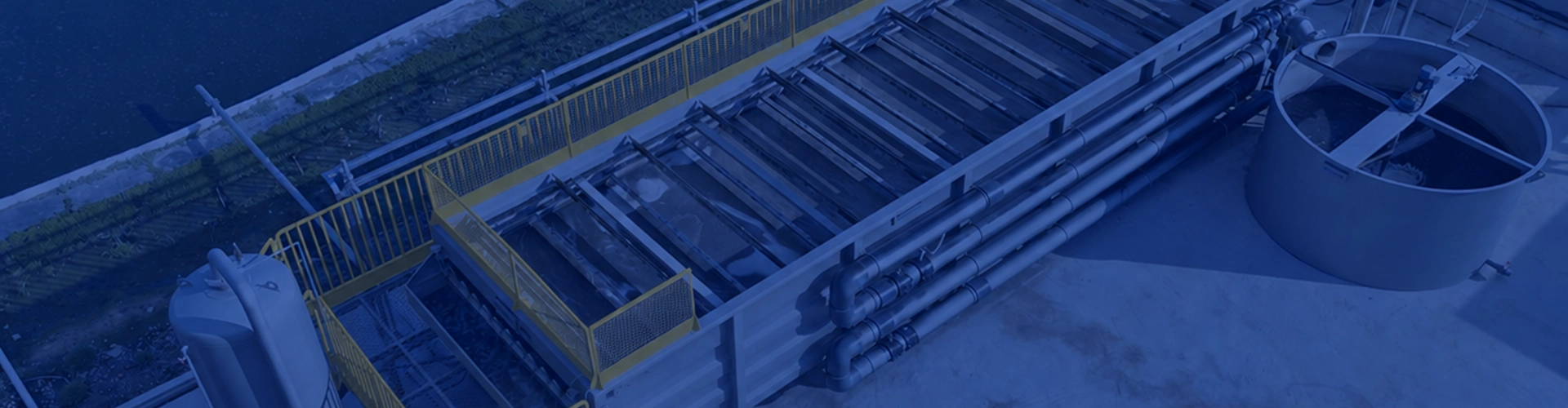
The flotodecantador is innovative equipment that combines the dissolved air flotation (DAF) and settling processes in a single compact system. This technology stands out in the wastewater treatment sector for its high efficiency in removing suspended solids, oils and greases, as well as organic matter, with a reduced footprint and great versatility of application.
Operating principle
The flotodecantador works through the synergistic integration of two fundamental physical processes:
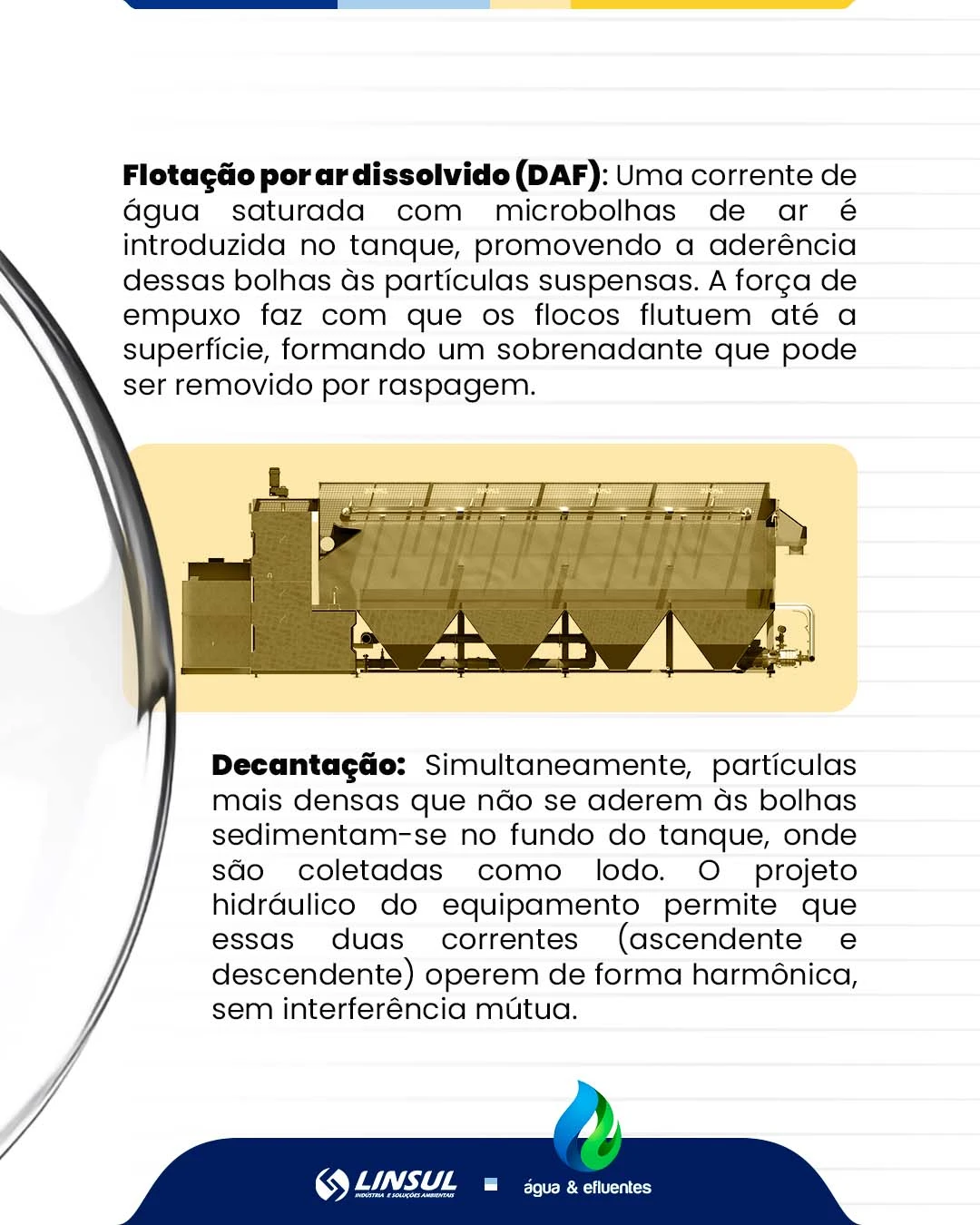
Dissolved air flotation (DAF): a stream of water saturated with air microbubbles is introduced into the tank, causing these bubbles to attach to the suspended particles. Buoyancy makes the flocs float to the surface, forming a supernatant that can be removed by scraping.
Settling: at the same time, denser particles that do not attach to the bubbles settle to the bottom of the tank, where they are collected as sludge. The equipment's hydraulic design allows these two streams (upward and downward) to operate in harmony, without interfering with each other.
This combination allows efficient removal of both light solids (with low apparent density) and heavy, settleable solids in the same treatment module. The treated liquid effluent is withdrawn from the intermediate phase.
Main applications
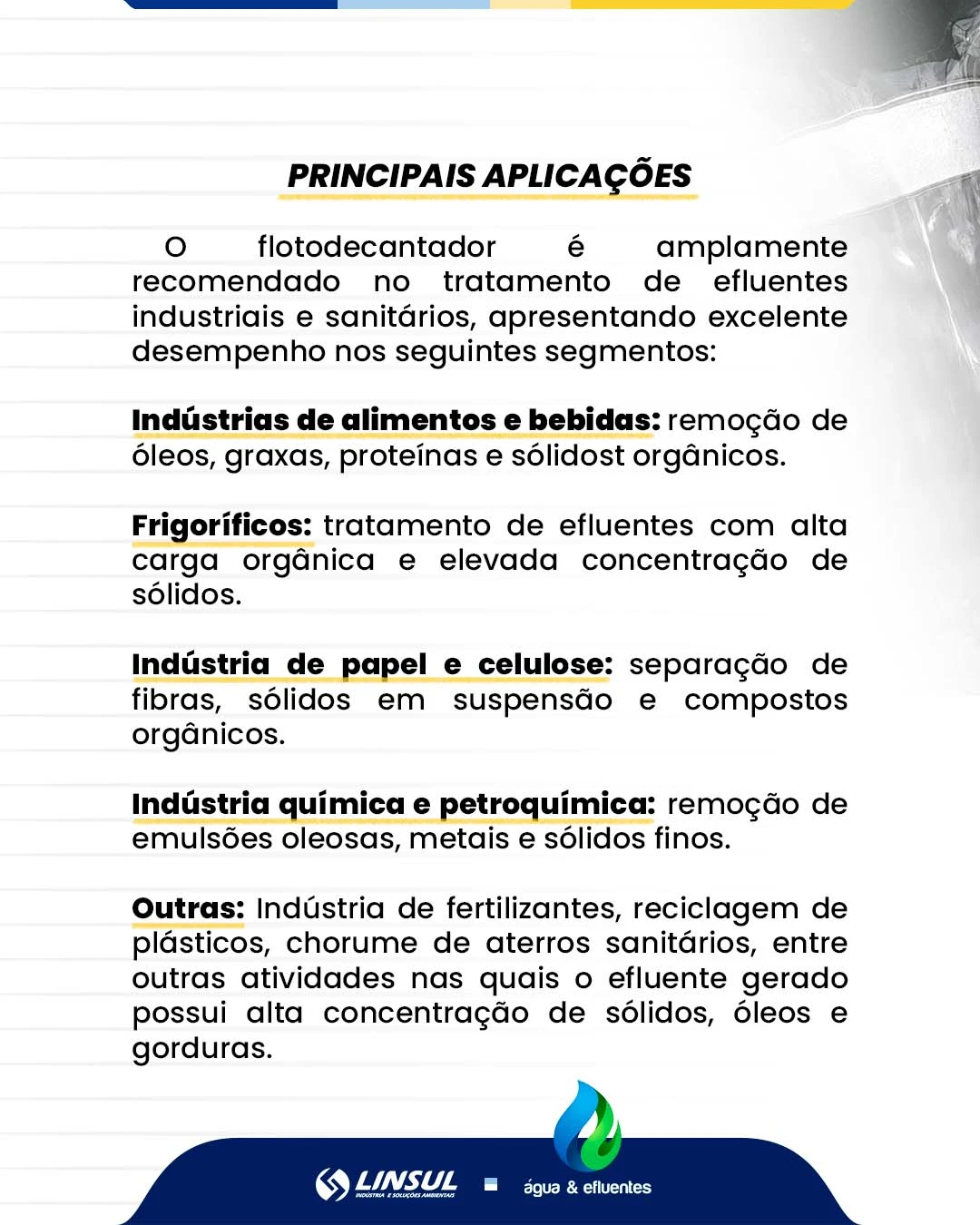
The flotodecantador is widely recommended for industrial and sanitary wastewater treatment, performing excellently in the following segments:
Food and beverage industries: removal of oils, greases, proteins and organic solids.
Meatpacking plants: treatment of wastewater with a high organic load and high solids concentration.
Pulp and paper industry: separation of fibers, suspended solids and organic compounds.
Chemical and petrochemical industry: removal of oily emulsions, metals and fine solids.
Sanitary wastewater: removal of fat, suspended and settleable solids, and organic matter. It can also be used to polish secondary or tertiary effluent, for additional removal of solids and phosphorus.
Others: Fertilizer industry, plastic recycling, landfill leachate, and other activities in which the wastewater generated has a high concentration of solids, oils and fats.
In addition, the flotodecantador can be used as pretreatment for more advanced processes, such as membranes or industrial reuse, increasing the service life and efficiency of the downstream systems.
Advantages of the flotodecantador
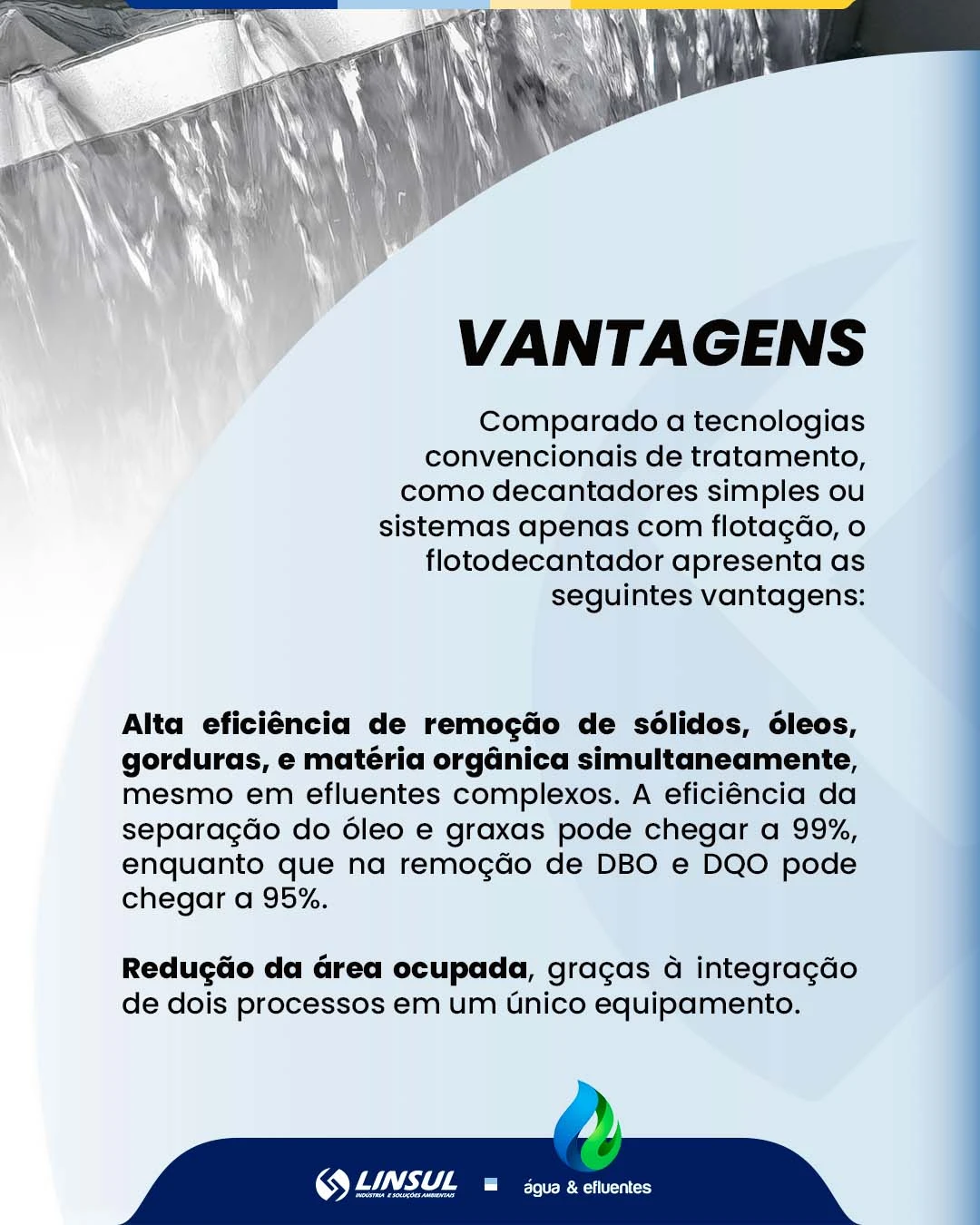
Compared to conventional treatment technologies, such as simple clarifiers or flotation-only systems, the flotodecantador offers several advantages:
High efficiency in removing solids, oils, fats and organic matter simultaneously, even in complex wastewater. Oil and grease separation efficiency can reach 99%, while BOD and COD removal can reach 95%.
Smaller footprint, thanks to the integration of two processes in a single piece of equipment.
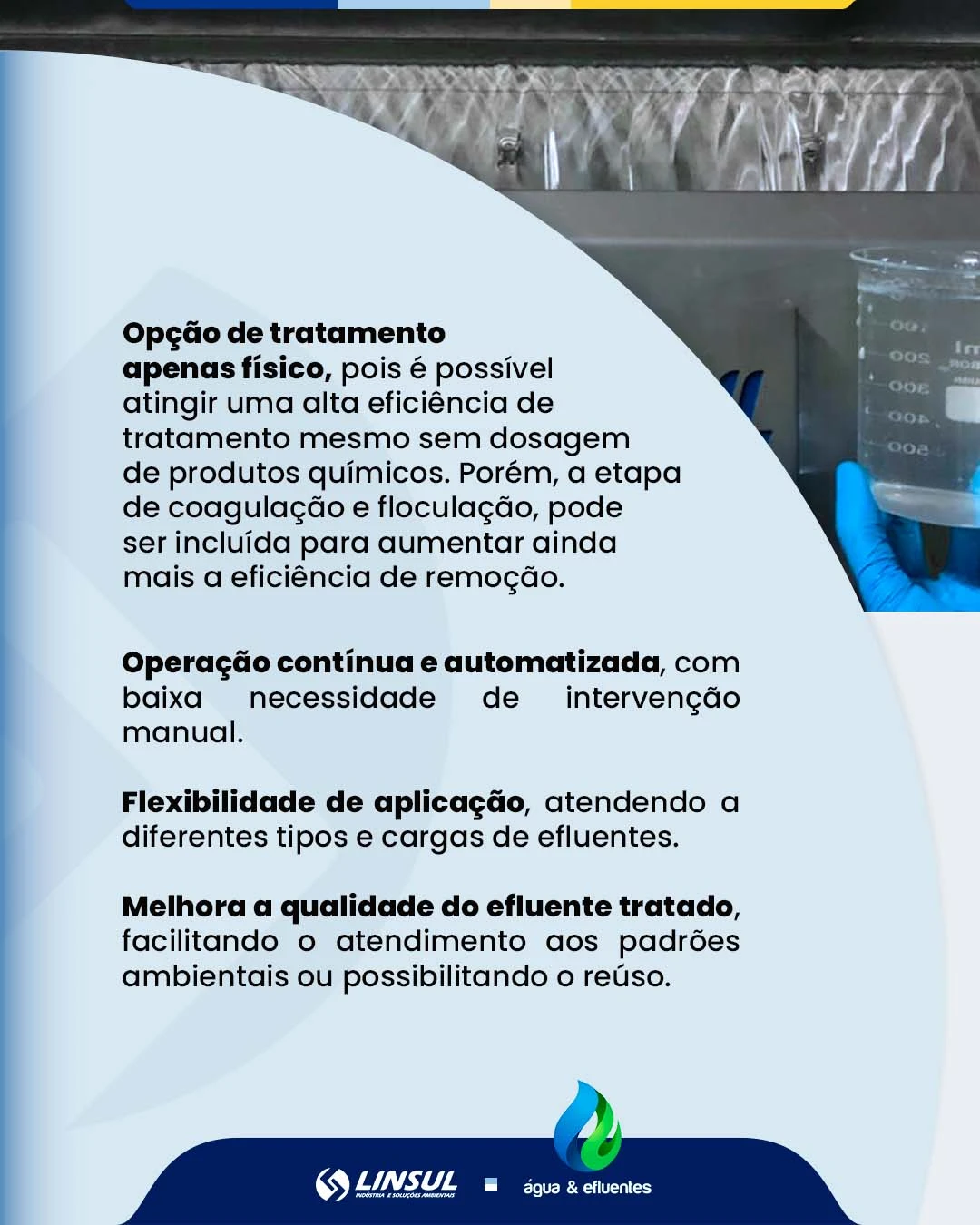
Physical-only treatment option, since high treatment efficiency can be achieved even without chemical dosing. However, a coagulation and flocculation stage can be included to further increase removal efficiency.
Continuous, automated operation, with little need for manual intervention.
Application flexibility, handling different types and loads of wastewater.
Improved treated effluent quality, making it easier to meet environmental standards or enabling reuse.
Final considerations
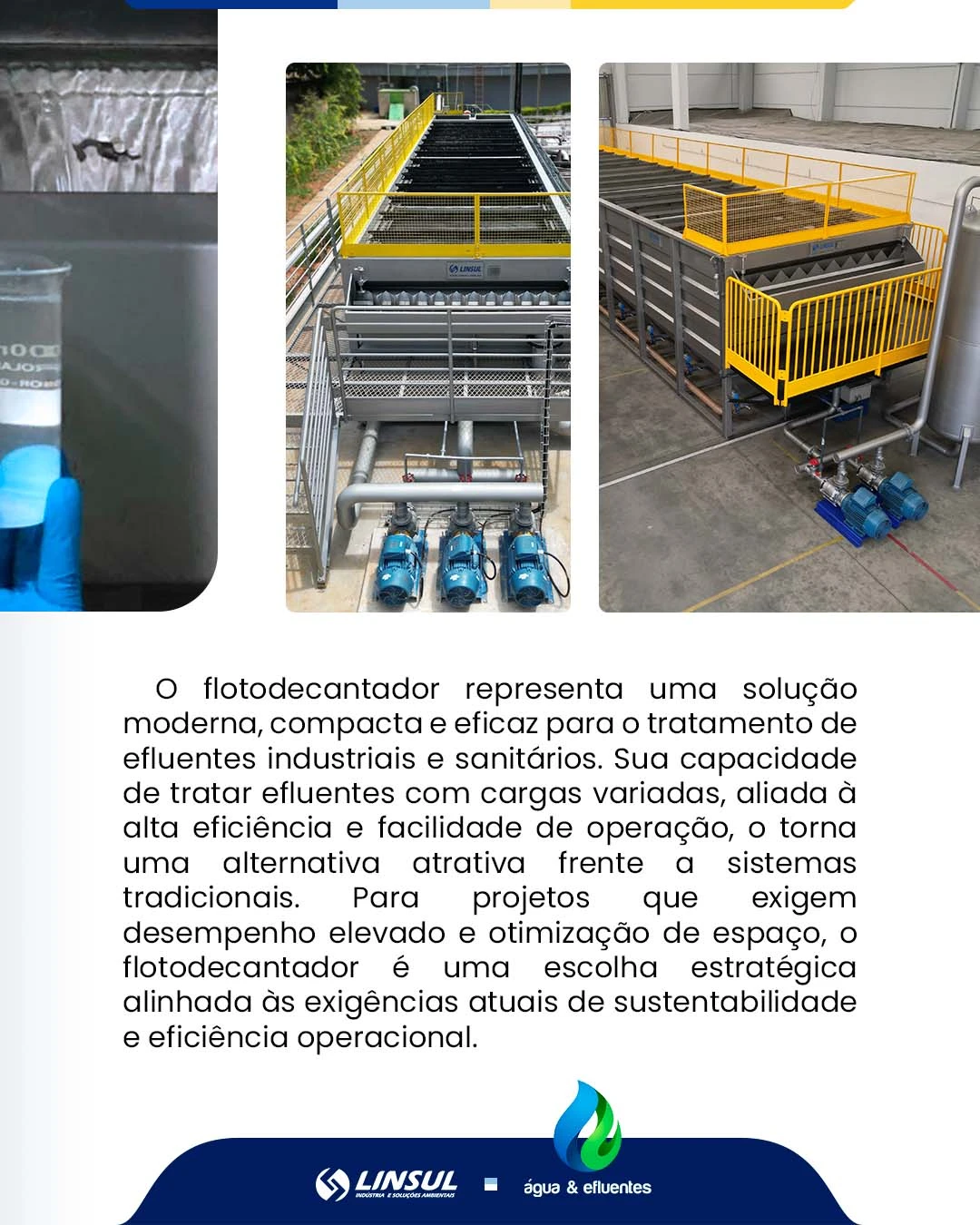
The flotodecantador is a modern, compact and effective solution for industrial and sanitary wastewater treatment. Its ability to treat wastewater with varying loads, combined with high efficiency and ease of operation, makes it an attractive alternative to traditional systems. For projects that require high performance and space optimization, the flotodecantador is a strategic choice aligned with today's sustainability and operational efficiency requirements.
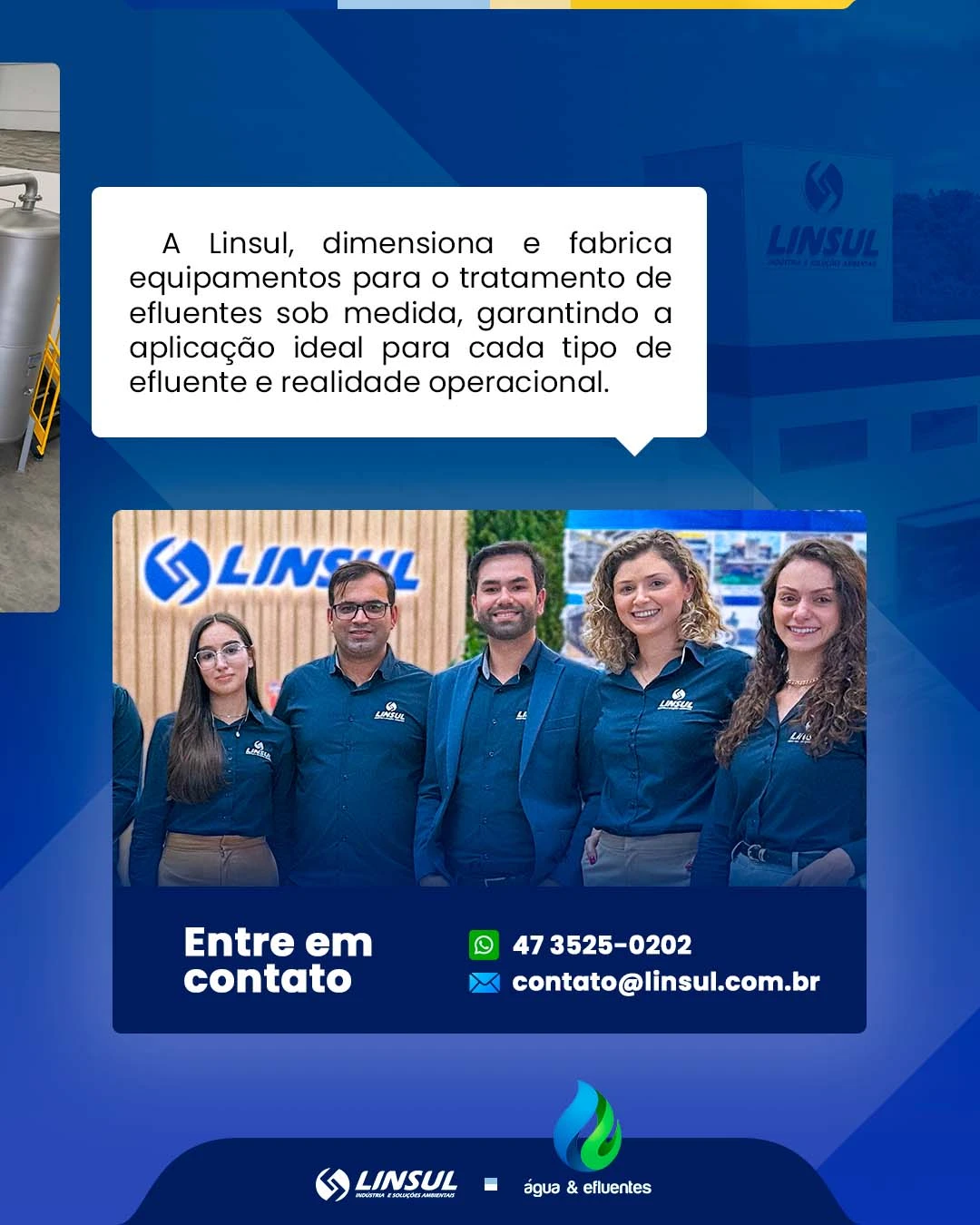
Linsul sizes and manufactures custom wastewater treatment equipment, ensuring the ideal application for each type of wastewater and operational reality.
Trends, news and
knowledge
Trends, news and knowledge
 News
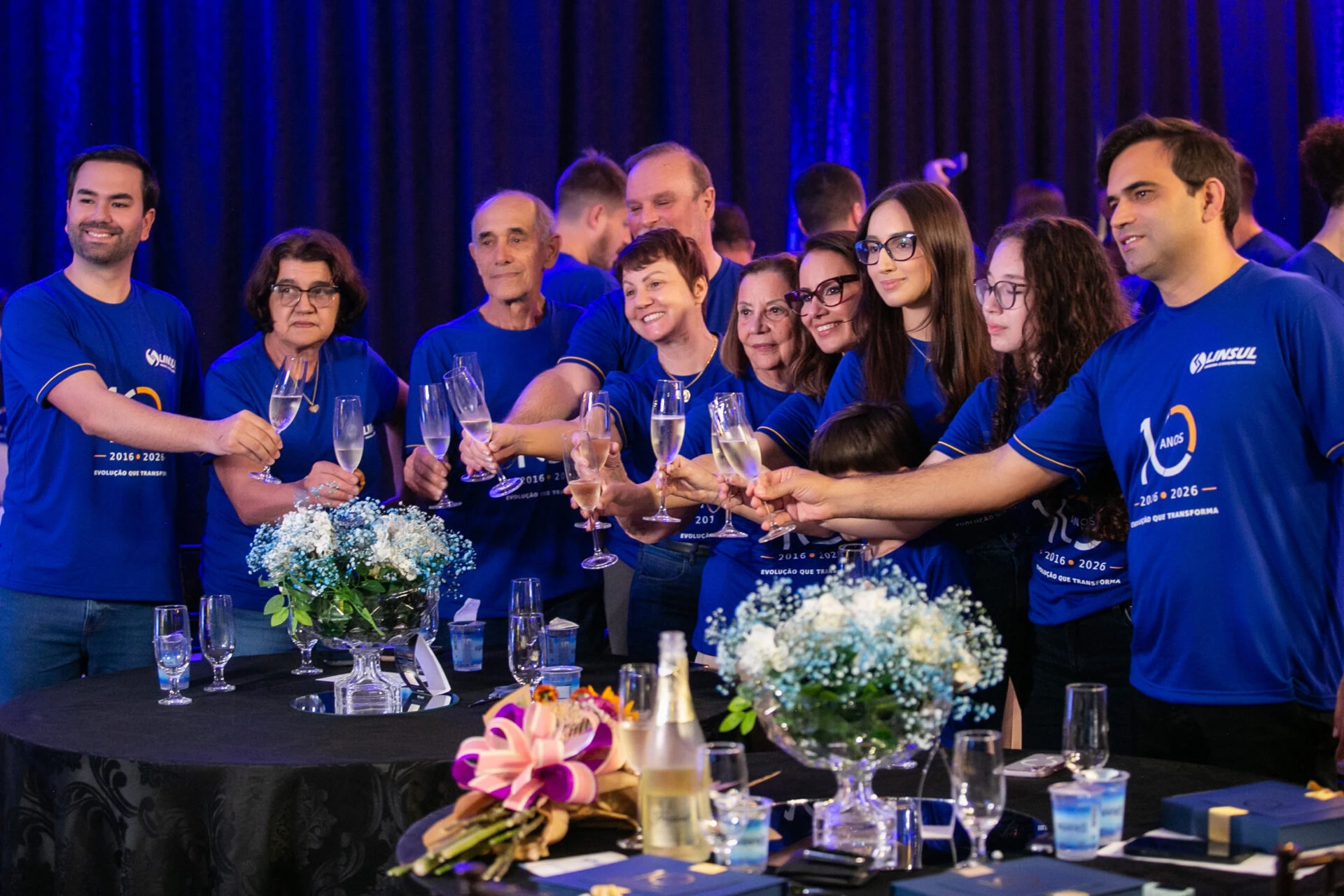
Linsul 10 Years | Evolution that Transforms
LINSUL celebrated a decade of history alongside those who helped make this journey a reality: employ...
 31 Aug 2026
 2 min read
 News
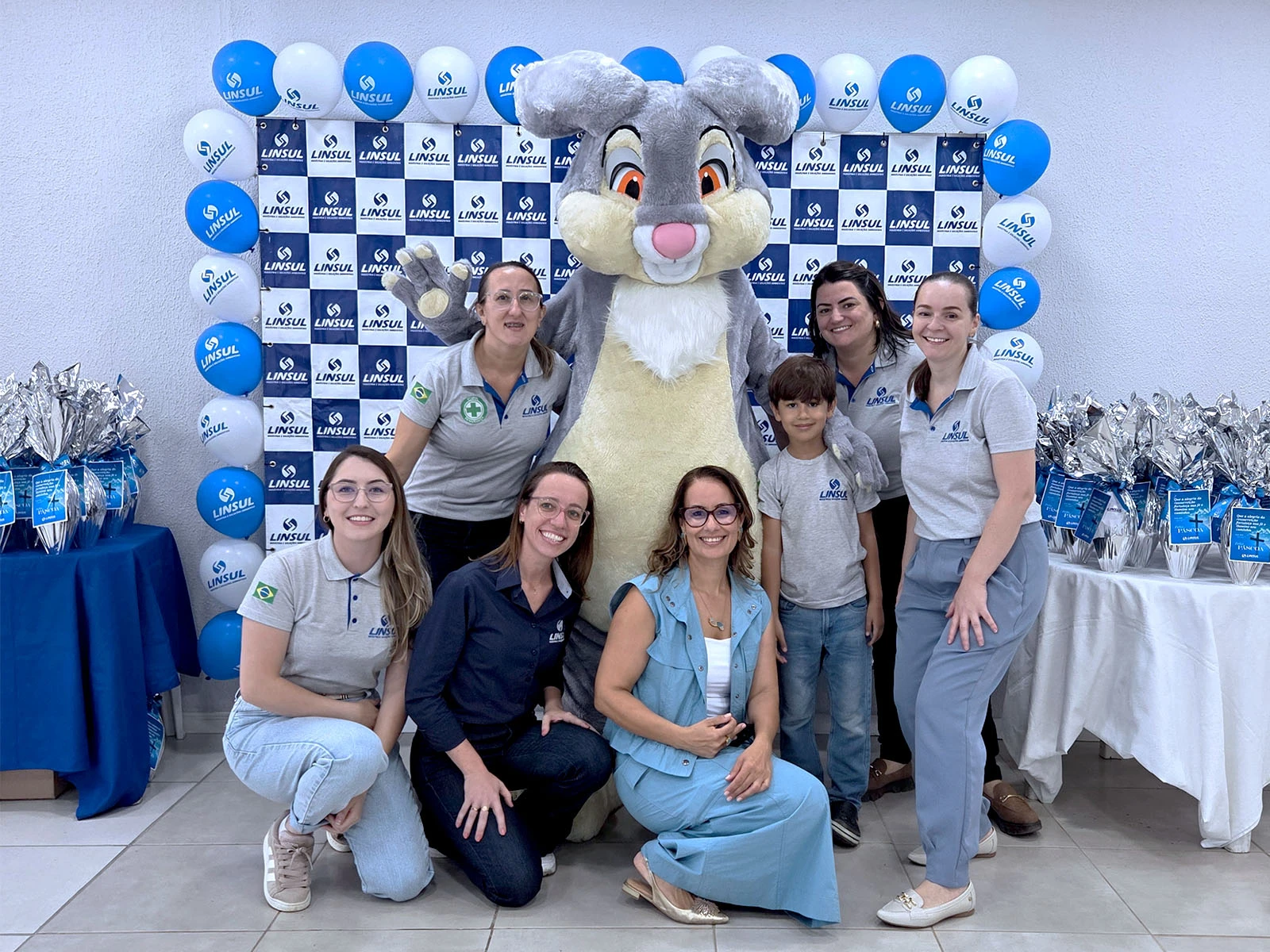
Renewal and Purpose: A Moment of Reflection on Our Journey
Easter is a time of renewal. At Linsul, we celebrated the date and the March birthdays with a specia...
07 Apr 2026
2 min read
 News
Become a wastewater treatment specialist
It's time to take the next step in your career!
26 Feb 2026
2 min read
 News
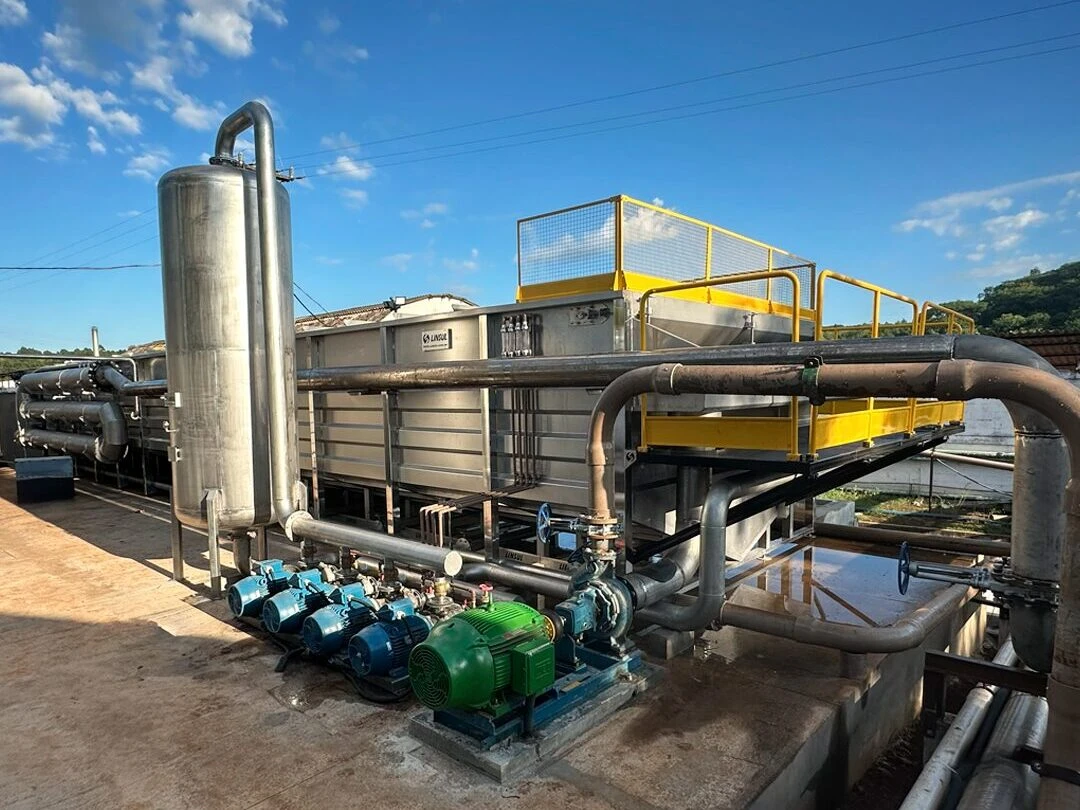
Success Story: Startup of a 600 m³/h Dissolved Air Flotator in the Pulp and Paper Industry
See the details of the startup of the 600 m³/h dissolved air flotator at a pulp and paper plant. Hig...
19 Feb 2026
2 min read
Commitment to Efficiency and Sustainability
We are committed to building solid, long-lasting partnerships with our clients, contributing to a more sustainable and efficient future.
Contact us