


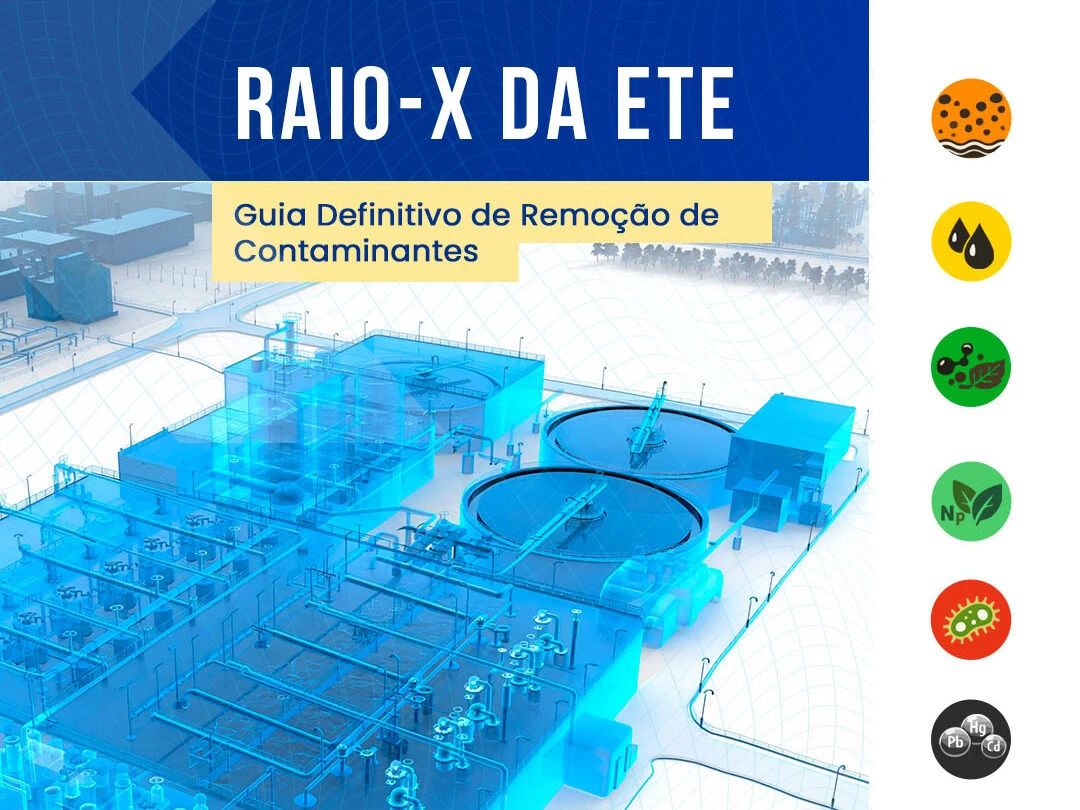
The Definitive Guide to Contaminant Removal in a Wastewater Treatment Plant (WWTP).
Treating wastewater is a strategic battle against elements that unbalance the ecosystem. For operators and engineers, understanding the "target" is the first step to getting the treatment techno…
Treating wastewater is a strategic battle against elements that unbalance the ecosystem. For operators and engineers, understanding the "target" is the first step to getting the treatment technology right. Below, we detail the villains of wastewater and how to neutralize them, organized for quick visual reference.
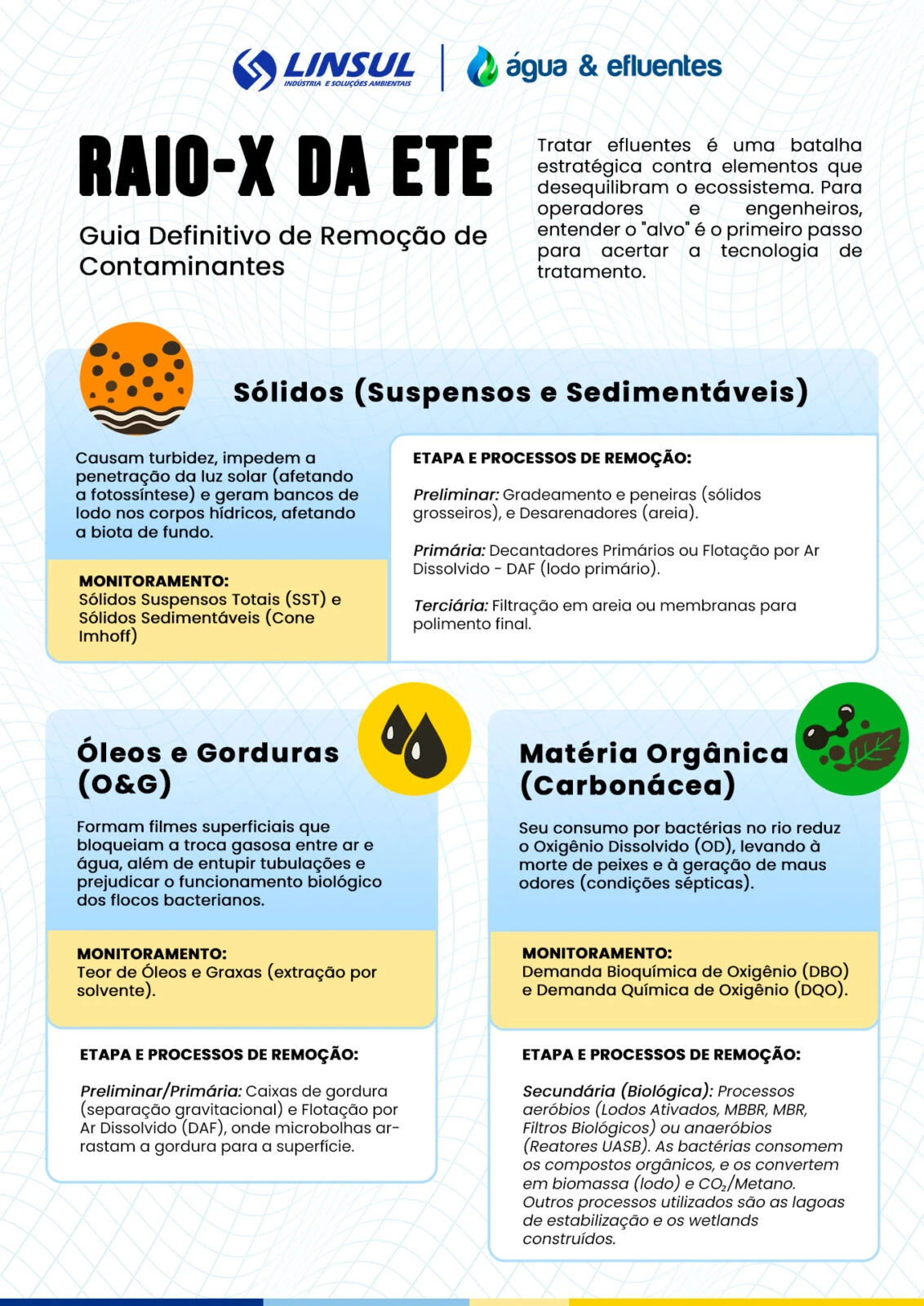
Solids (Suspended and Settleable)
- Impact: They cause turbidity, block sunlight penetration (affecting photosynthesis) and create sludge banks in water bodies, affecting bottom-dwelling life.
- Monitoring: Total Suspended Solids (TSS) and Settleable Solids (Imhoff Cone).
Removal Stage and Processes:
- Preliminary: Bar screens and screens (coarse solids), and Grit Chambers (sand).
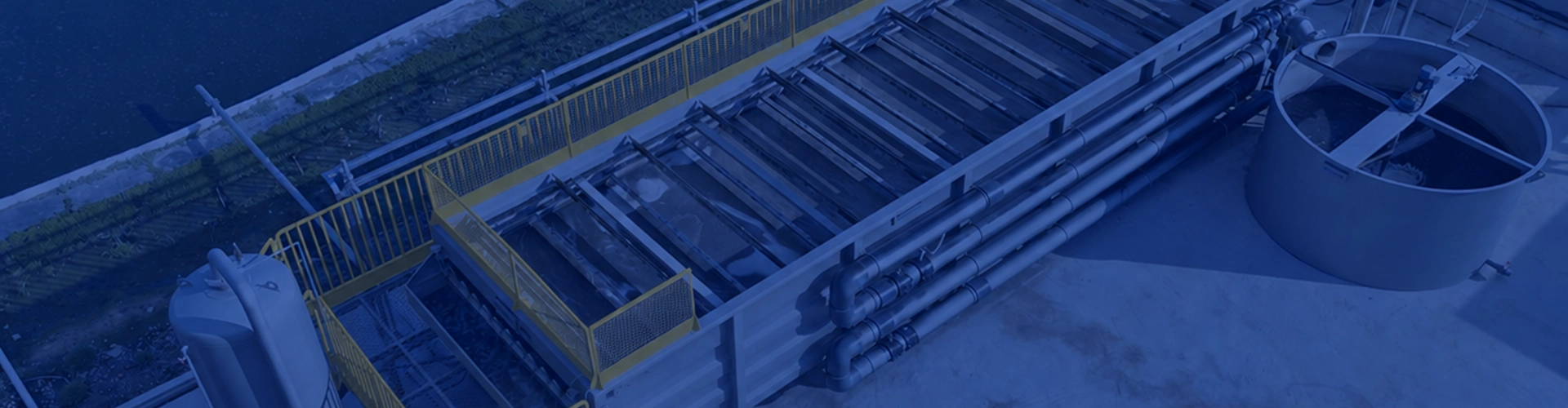
- Primary: Primary Clarifiers or Dissolved Air Flotation - DAF (primary sludge).
- Tertiary: Sand or membrane filtration for final polishing.
Oils and Greases (O&G)
- Impact: They form surface films that block gas exchange between air and water, as well as clogging pipes and impairing the biological functioning of bacterial flocs.
- Monitoring: Oil and Grease content (solvent extraction).
Removal Stage and Processes:
- Preliminary/Primary: Grease traps (gravity separation) and Dissolved Air Flotation (DAF), where microbubbles carry the grease to the surface.
Organic Matter (Carbonaceous)
- Impact: Its consumption by bacteria in the river reduces Dissolved Oxygen (DO), leading to fish deaths and foul odors (septic conditions).
- Monitoring: Biochemical Oxygen Demand (BOD) and Chemical Oxygen Demand (COD).
Removal Stage and Processes:
- Secondary (Biological): Aerobic processes (Activated Sludge, MBBR, MBR, Trickling Filters) or anaerobic processes (UASB Reactors). Bacteria consume the organic compounds and convert them into biomass (sludge) and CO₂/Methane. Other processes used are stabilization ponds and constructed wetlands.
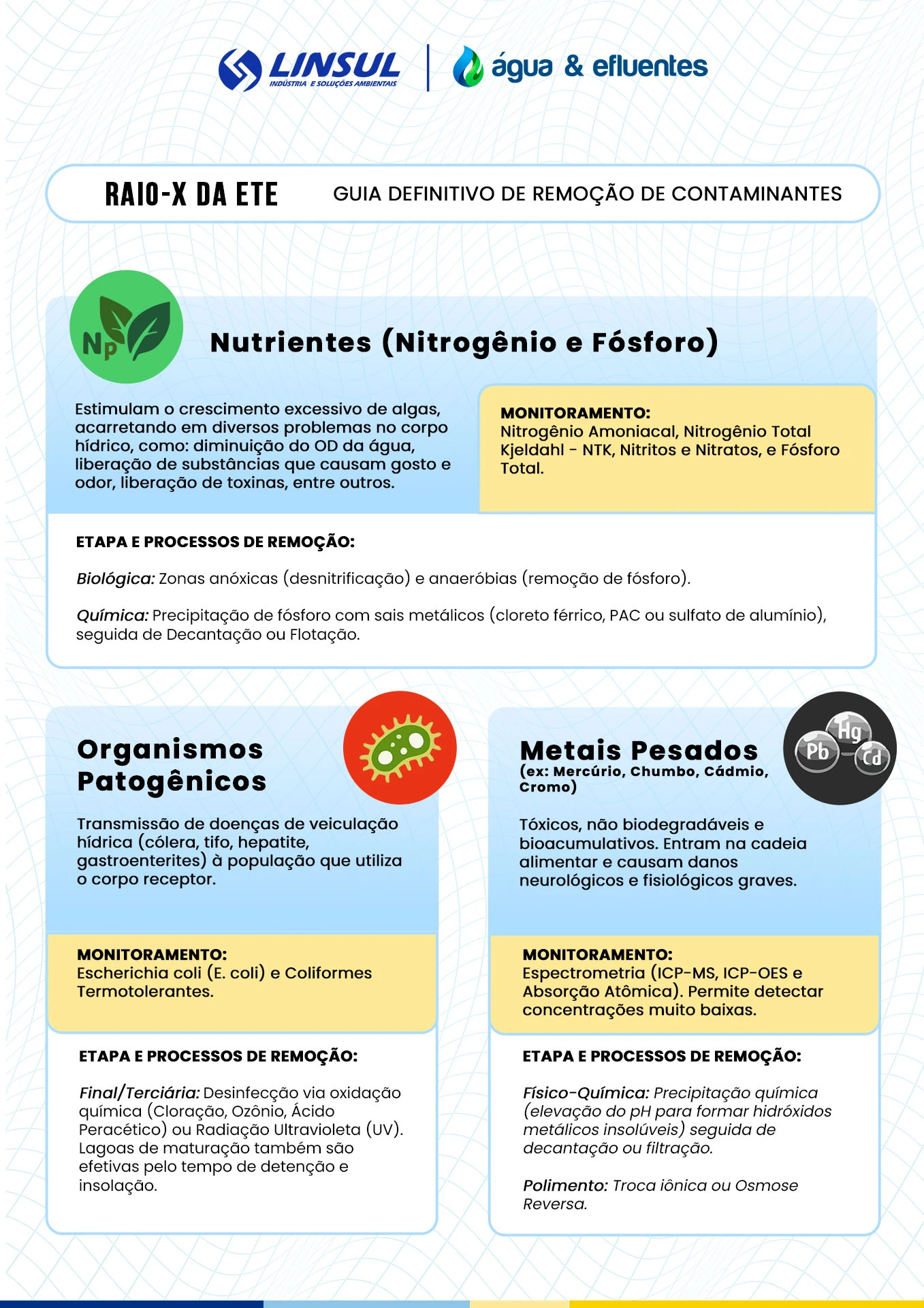
Nutrients (Nitrogen and Phosphorus)
- Impact: They stimulate excessive algae growth, causing many problems in the water body, such as lower DO, release of substances that cause taste and odor, and release of toxins, among others.
- Monitoring: Ammonia Nitrogen, Total Kjeldahl Nitrogen (TKN), Nitrites and Nitrates, and Total Phosphorus.
Removal Stage and Processes:
- Biological: Anoxic zones (denitrification) and anaerobic zones (phosphorus removal).
- Chemical: Phosphorus precipitation with metal salts (ferric chloride, PAC or aluminum sulfate), followed by Settling or Flotation.
Pathogenic Organisms
- Impact: Transmission of waterborne diseases (cholera, typhoid, hepatitis, gastroenteritis) to the population that uses the receiving body.
- Monitoring: Escherichia coli (E. coli) and Thermotolerant Coliforms.
Removal Stage and Processes:
- Final/Tertiary: Disinfection by chemical oxidation (Chlorination, Ozone, Peracetic Acid) or Ultraviolet (UV) Radiation. Maturation ponds are also effective due to detention time and sunlight exposure.
Heavy Metals (e.g. Mercury, Lead, Cadmium, Chromium)
- Impact: Toxic, non-biodegradable and bioaccumulative. They enter the food chain and cause serious neurological and physiological damage.
- Monitoring: Spectrometry (ICP-MS, ICP-OES and Atomic Absorption), which can detect very low concentrations.
Removal Stage and Processes:
- Physicochemical: Chemical precipitation (raising the pH to form insoluble metal hydroxides) followed by settling or filtration.
- Polishing: Ion exchange or Reverse Osmosis.
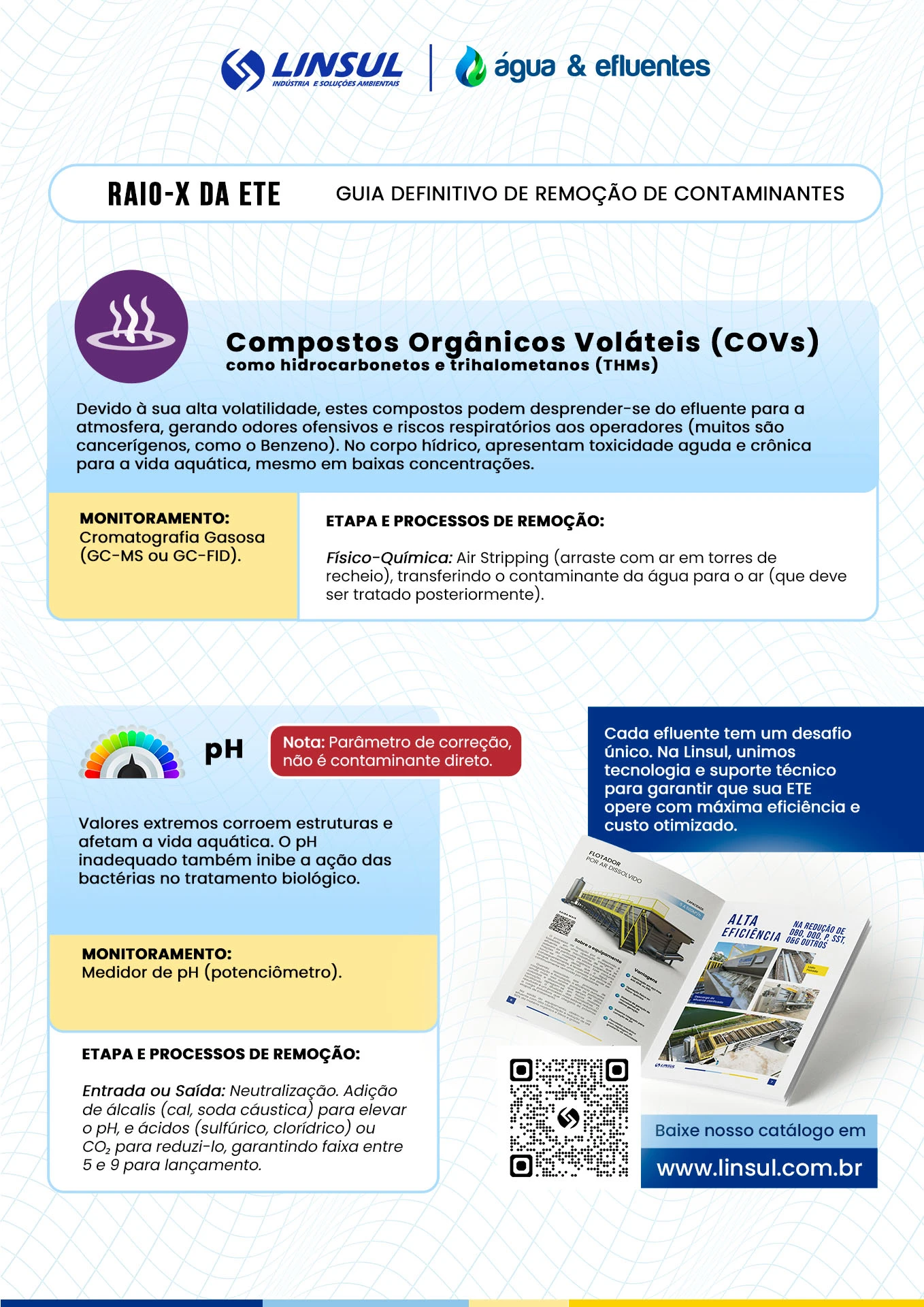
Volatile Organic Compounds (VOCs), such as hydrocarbons and trihalomethanes (THMs)
- Impact: Due to their high volatility, these compounds can escape from the wastewater into the atmosphere, generating offensive odors and respiratory risks for operators (many are carcinogenic, such as Benzene). In the water body, they are acutely and chronically toxic to aquatic life, even at low concentrations.
- Monitoring: Gas Chromatography (GC-MS or GC-FID).
Removal Stage and Processes:
- Physicochemical (Transfer): Air Stripping (in packed towers), transferring the contaminant from the water to the air (which must then be treated).
- Polishing: Adsorption on Activated Carbon (granular or powdered), where the VOCs are retained on the carbon's porous surface.
- Destruction: Advanced Oxidation Processes (AOP) using Ozone and Hydrogen Peroxide.
pH
- Note: A correction parameter, not a direct contaminant.
- Impact: Extreme values corrode structures and affect aquatic life. Inadequate pH also inhibits bacterial action in biological treatment.
- Monitoring: pH meter (potentiometer).
Adjustment:
- Inlet or Outlet: Neutralization. Adding alkalis (lime, caustic soda) to raise the pH, and acids (sulfuric, hydrochloric) or CO₂ to lower it, ensuring a range between 5 and 9 for discharge.
The Engineering Behind Environmental Compliance
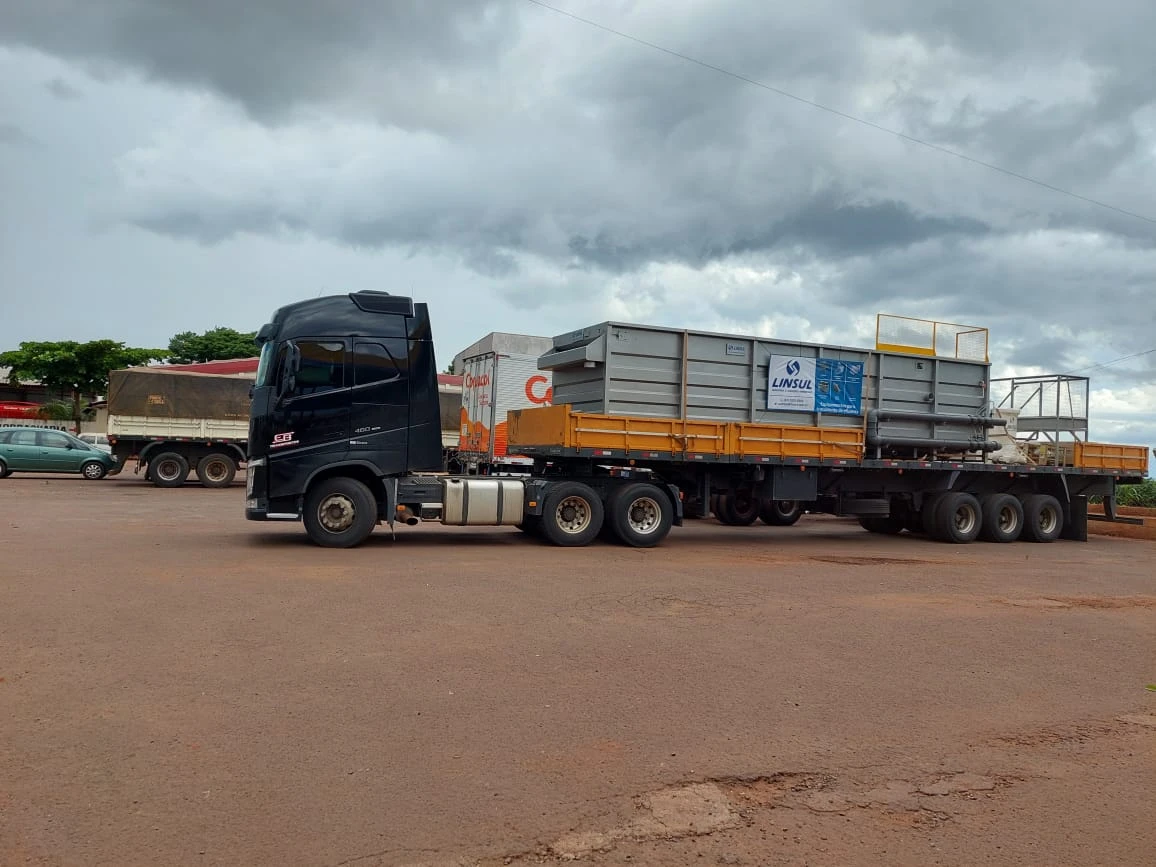
Efficient contaminant removal depends not only on the choice of biological or chemical process, but on the precision of the engineering applied to the equipment. This is where Linsul Indústria e Soluções Ambientais stands out as a strategic partner for the public and private sectors.
As designers and manufacturers, we master every stage of the treatment cycle. Our solutions are developed to withstand the harshest operating conditions, ensuring that the final effluent strictly meets discharge or reuse parameters.
The Linsul Difference at Your WWTP:
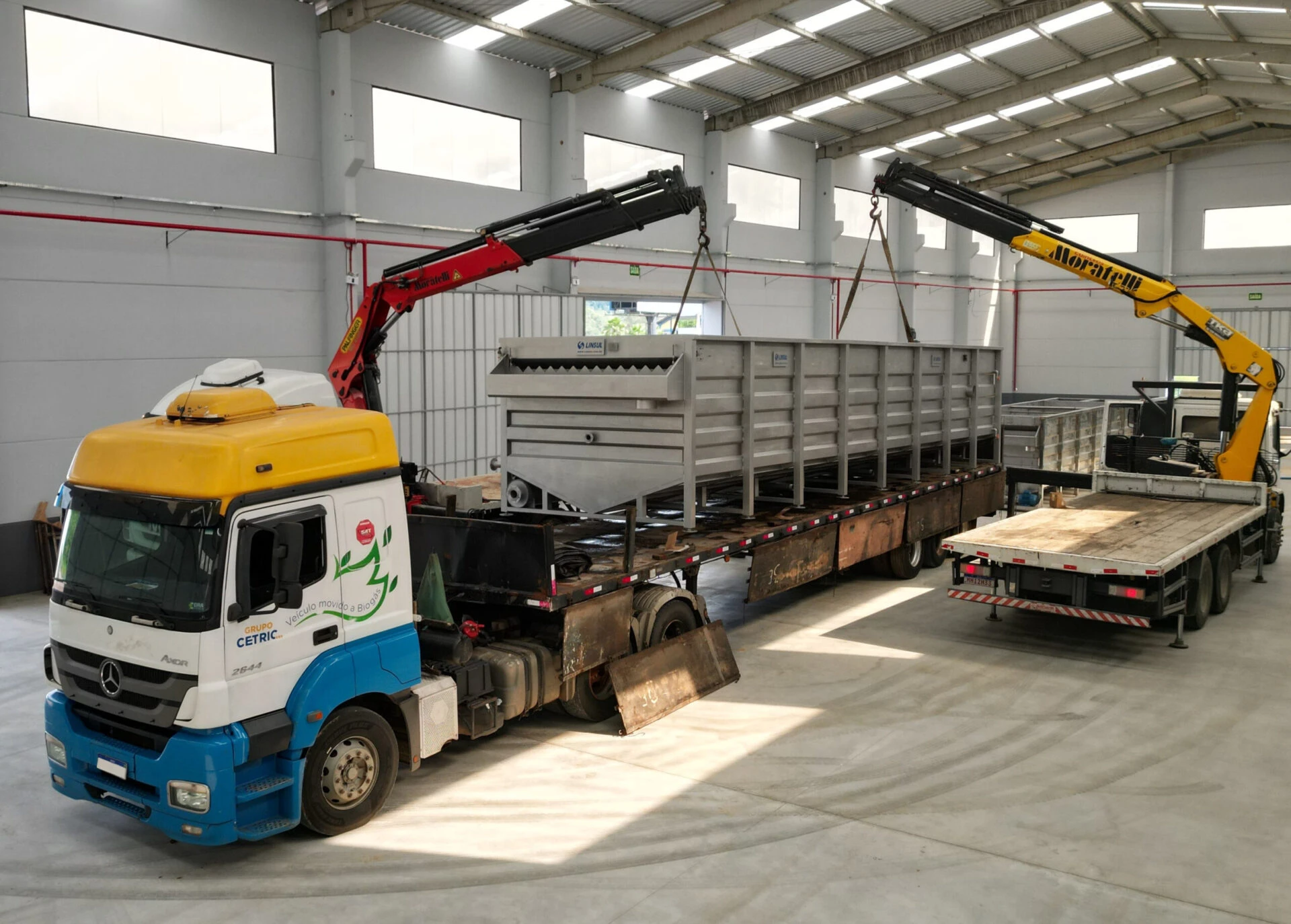
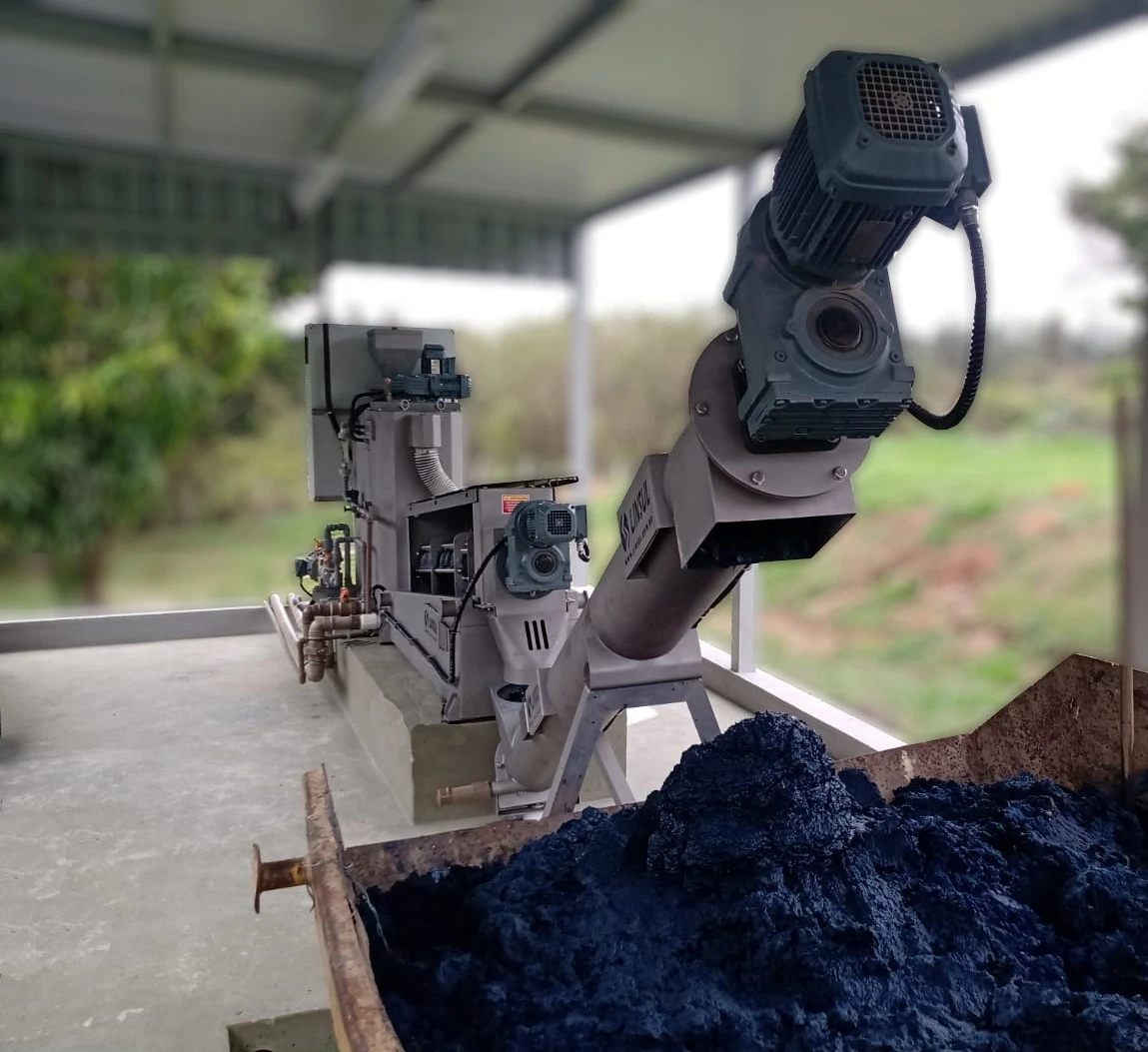
In-house Manufacturing: Robust equipment in stainless steel and high-resistance materials, ensuring the plant's assets last.
Custom Projects: We don't just deliver machines; we size solutions that adapt to the organic load and particularities of your wastewater.
Separation Technology: Our flotators (DAF), clarifiers and screening systems are a benchmark for hydraulic efficiency and low energy consumption.
By choosing Linsul, your operation gains the security of cutting-edge Brazilian technology, specialized technical support and a commitment to preserving water resources.
Turn the treatment challenge into a safe and sustainable operation.
? Make Your Daily Operations Easier
To help with monitoring and quick technical reference at your plant, we have prepared A4-format material ready to print. Keep the main contaminant removal guidelines always at hand on your WWTP's panel.
Trends, news and
knowledge
Trends, news and knowledge
 News
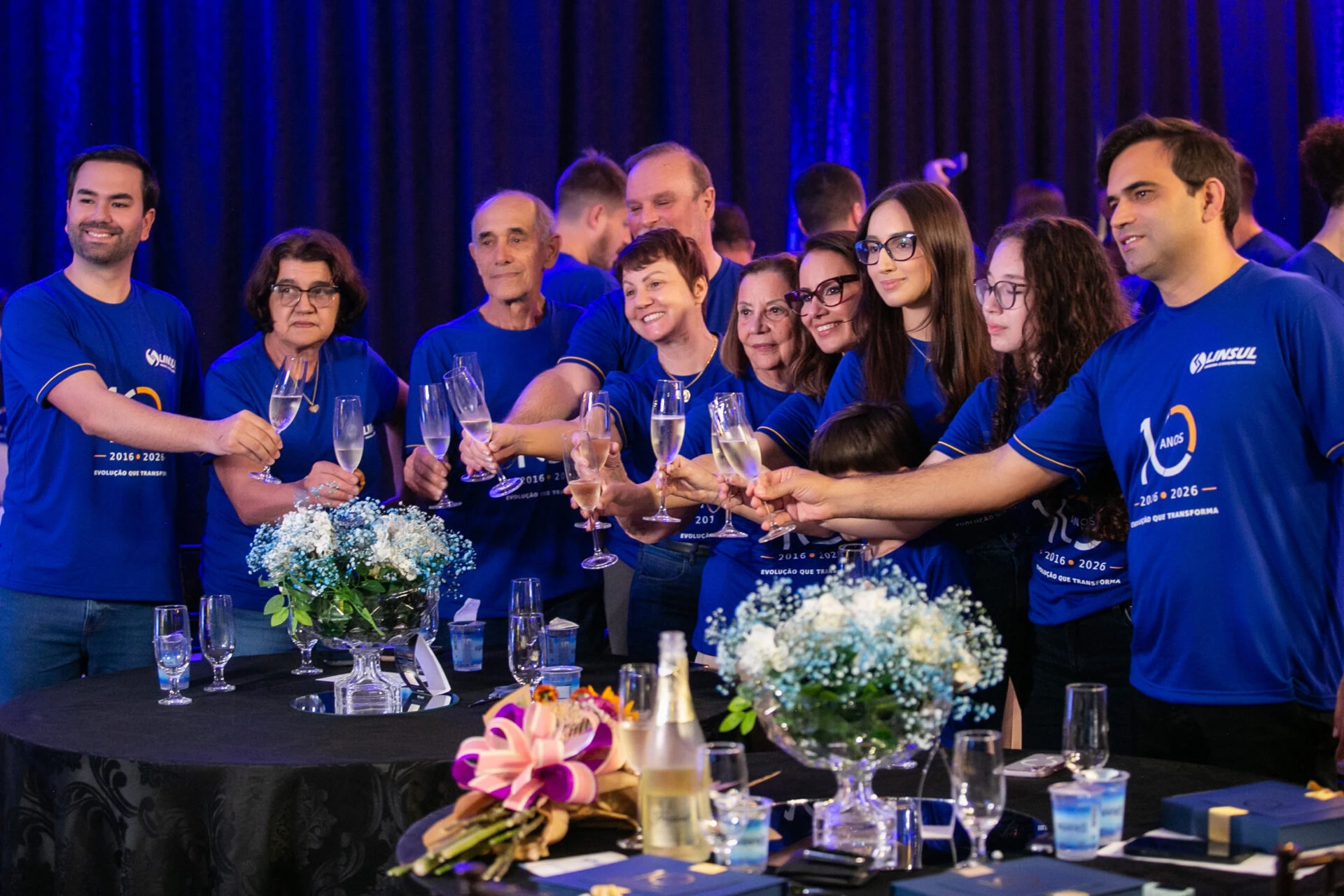
Linsul 10 Years | Evolution that Transforms
LINSUL celebrated a decade of history alongside those who helped make this journey a reality: employ...
 31 Aug 2026
 2 min read
 News
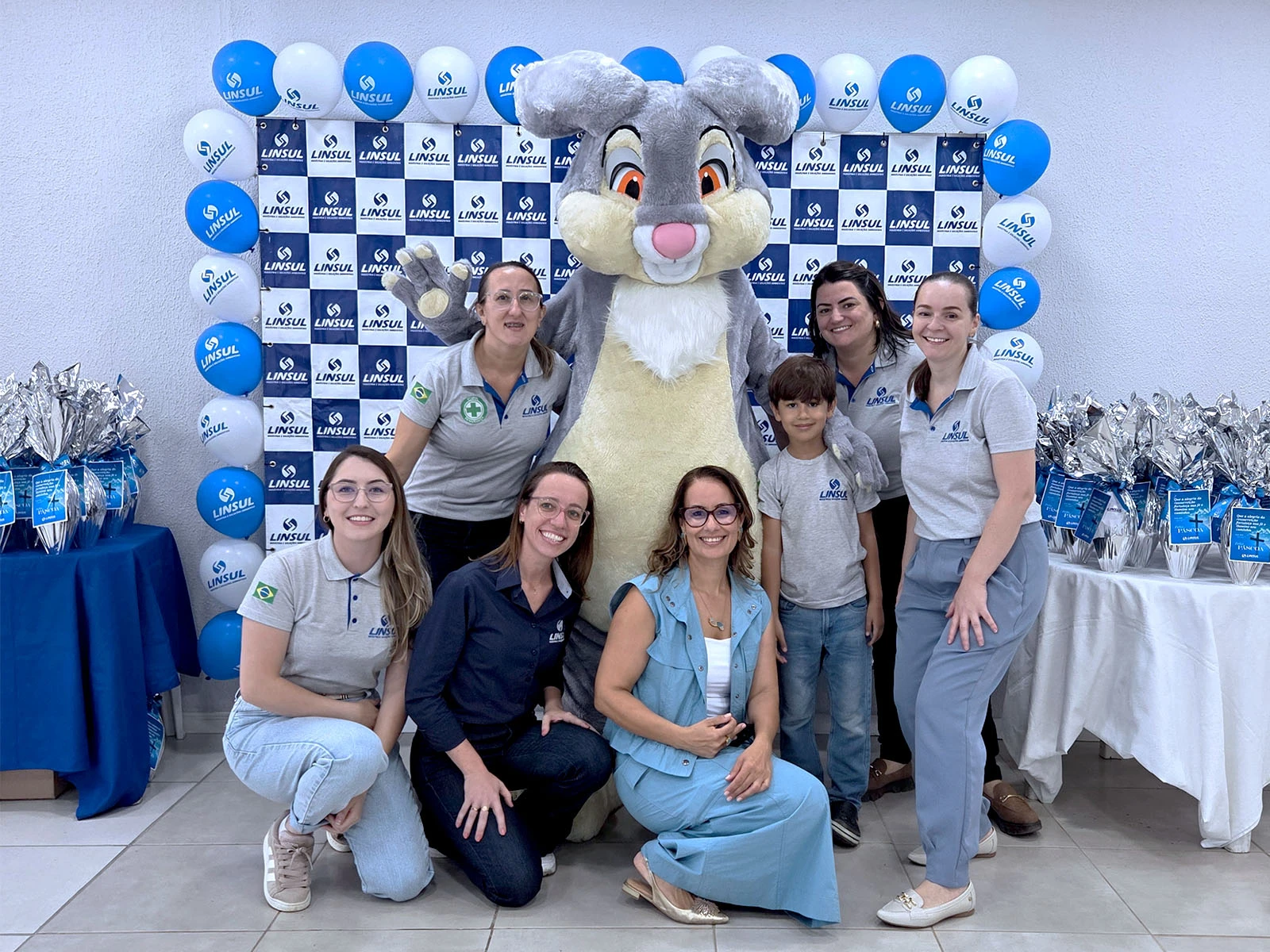
Renewal and Purpose: A Moment of Reflection on Our Journey
Easter is a time of renewal. At Linsul, we celebrated the date and the March birthdays with a specia...
07 Apr 2026
2 min read
 News
Become a wastewater treatment specialist
It's time to take the next step in your career!
26 Feb 2026
2 min read
 News
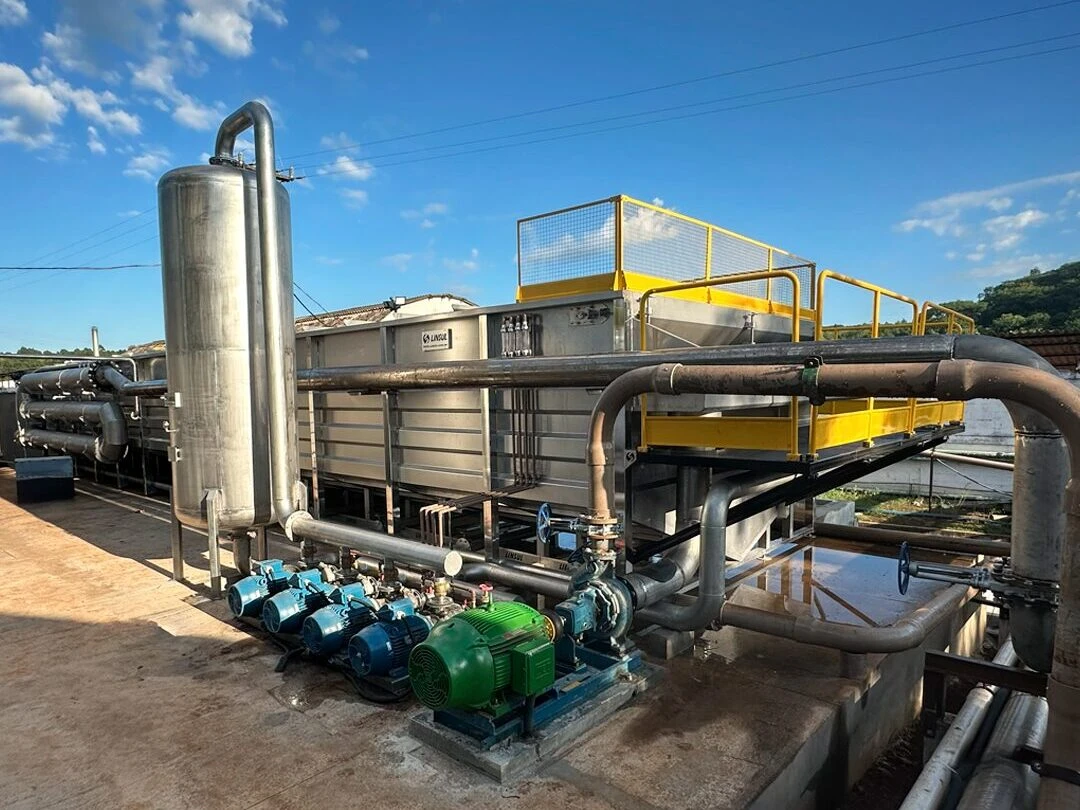
Success Story: Startup of a 600 m³/h Dissolved Air Flotator in the Pulp and Paper Industry
See the details of the startup of the 600 m³/h dissolved air flotator at a pulp and paper plant. Hig...
19 Feb 2026
2 min read
Commitment to Efficiency and Sustainability
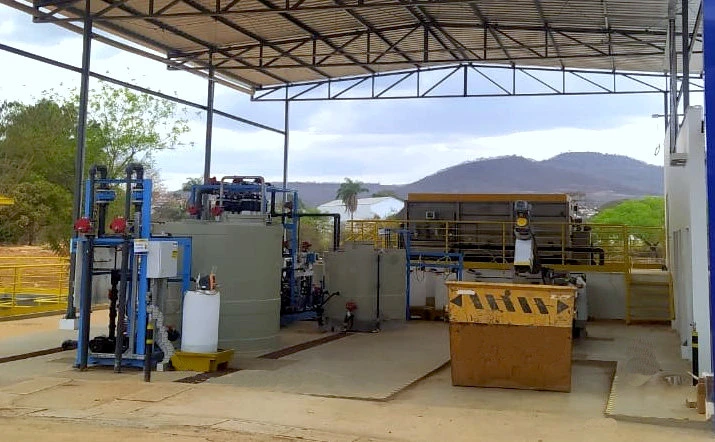
We are committed to building solid, long-lasting partnerships with our clients, contributing to a more sustainable and efficient future.
Contact us